Last updated November 20, 2026
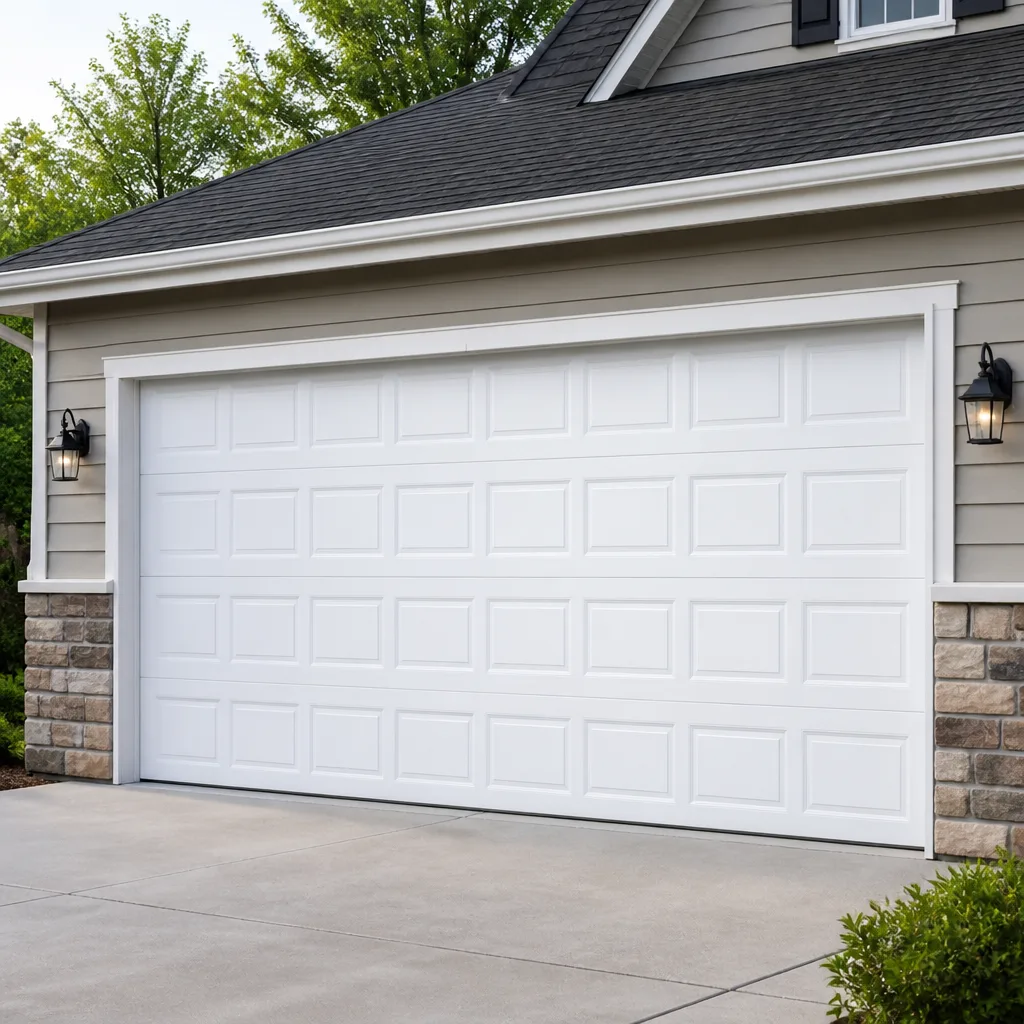 Raised-panel steel
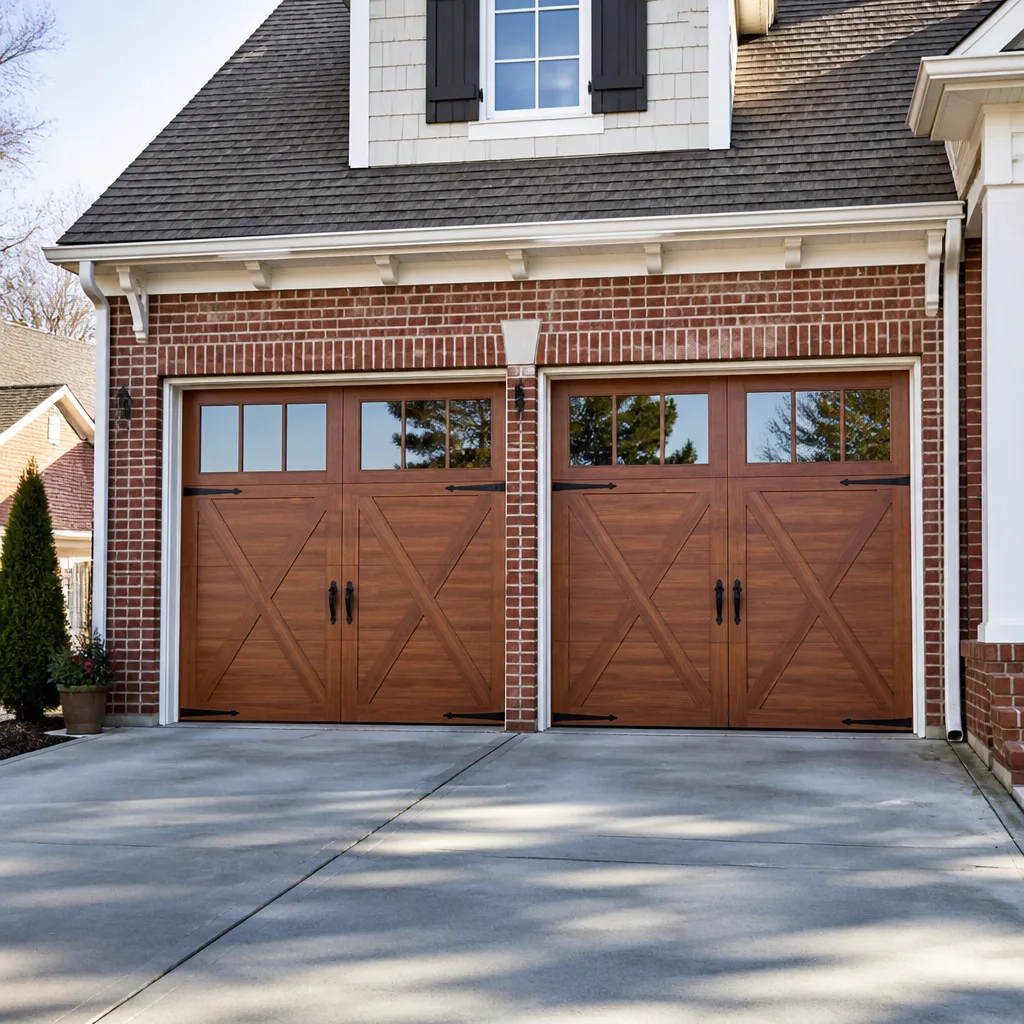 Carriage house
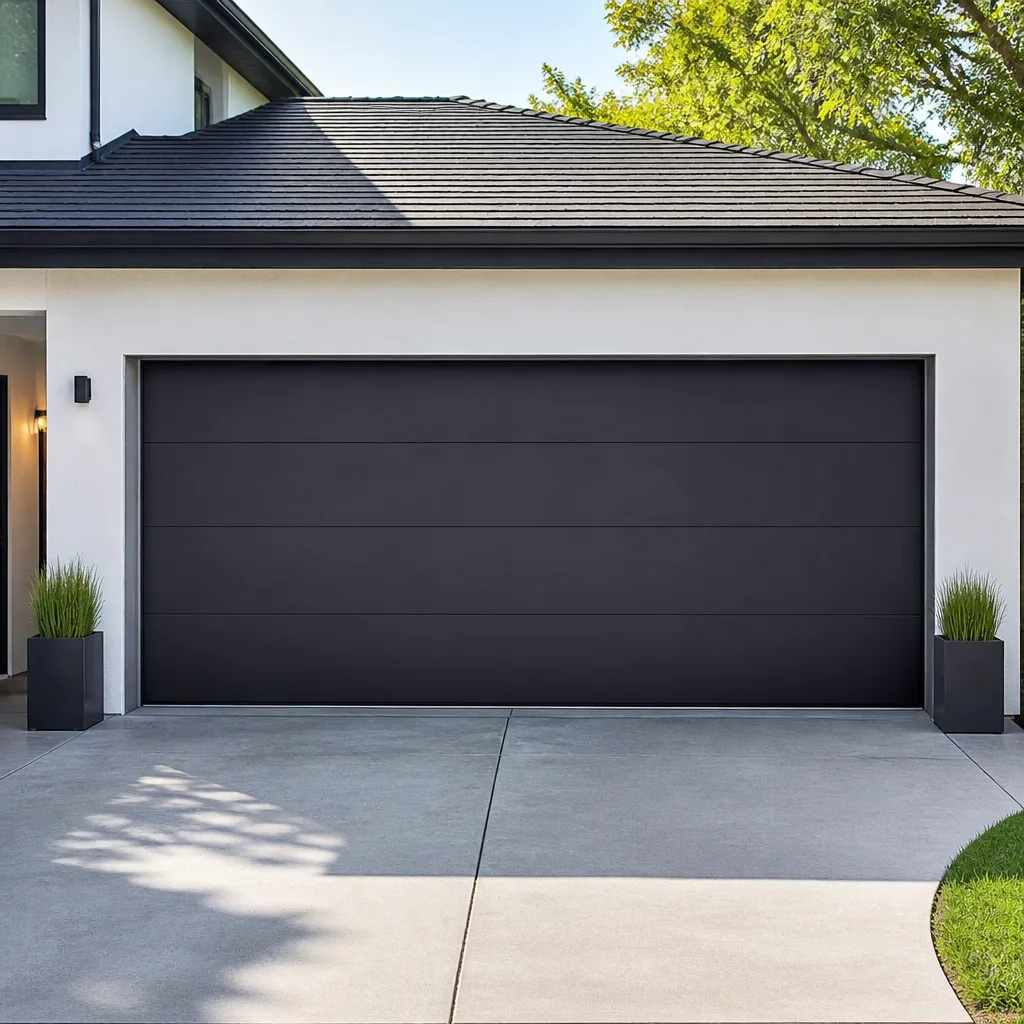 Modern flush
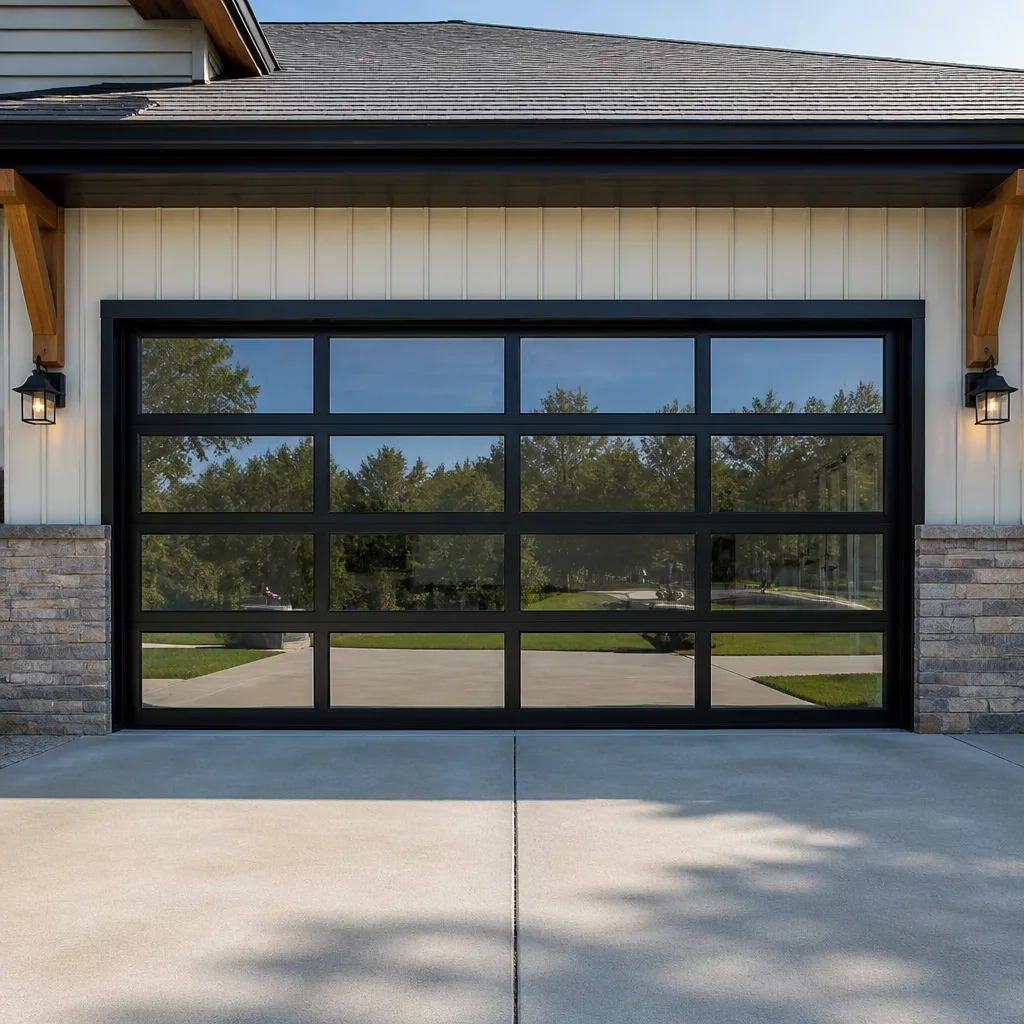 Full-view glass
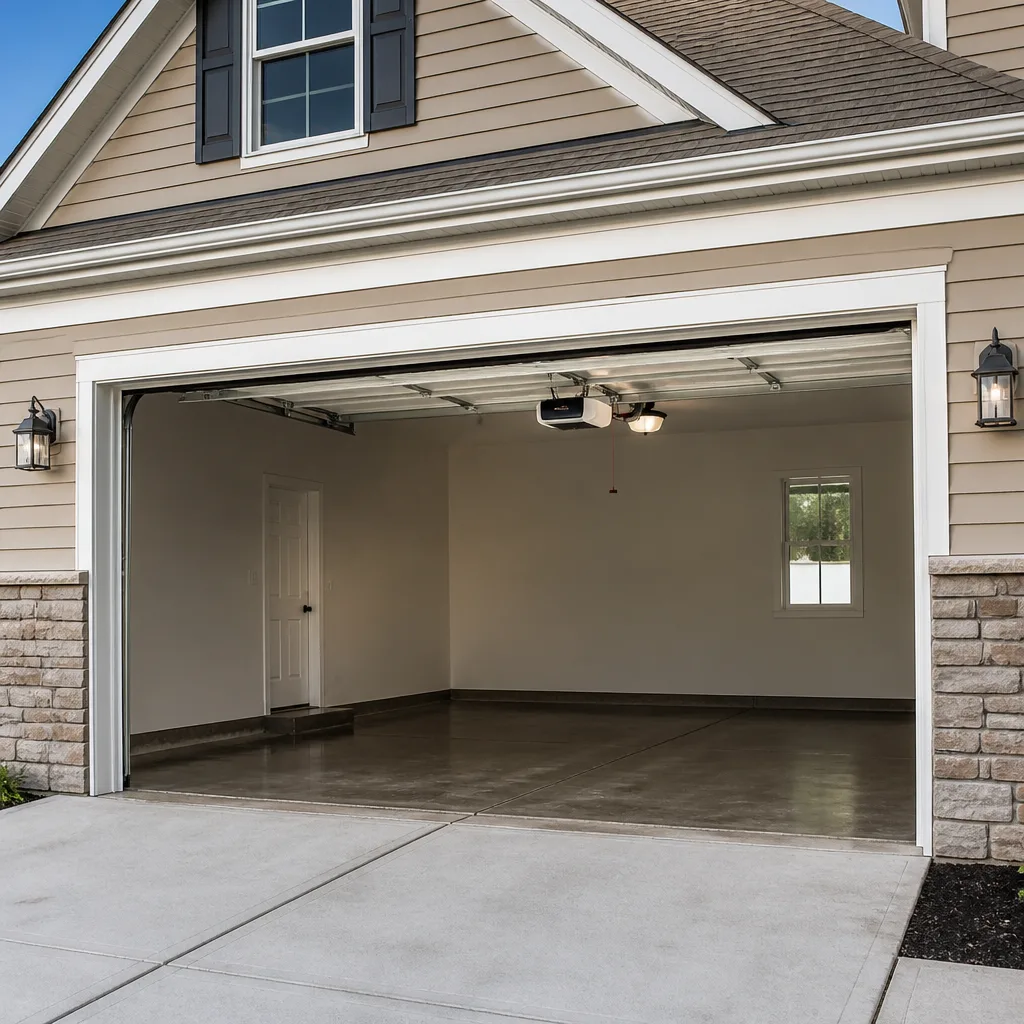 LiftMaster openers
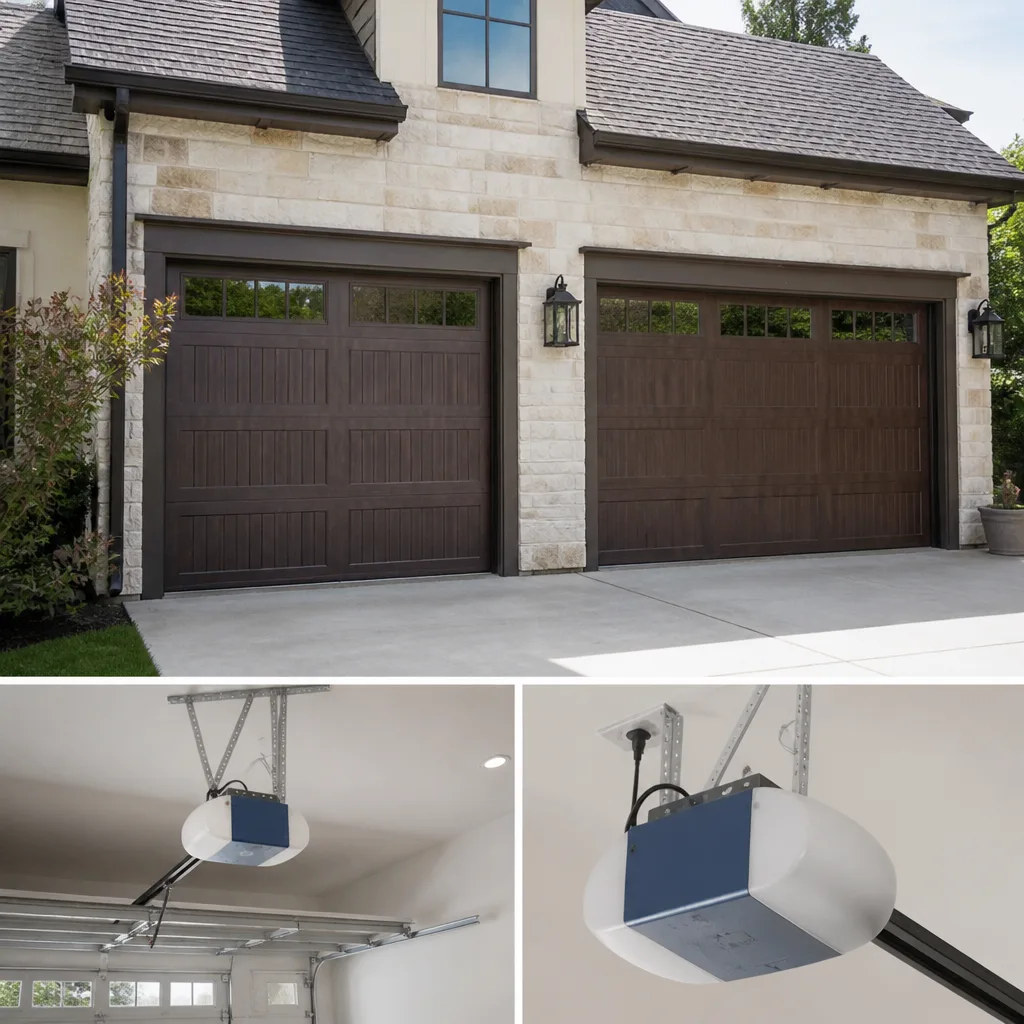 Chamberlain openers
Full 25-point door and opener safety check with every visit - springs, cables, rollers, tracks, and your LiftMaster or Chamberlain opener included
You get a price before we start. It does not change when the pro arrives.
Get your free estimateGarage Door Repair Maintenance Checklist for Levittown Homeowners
Most garage door maintenance checklists are interchangeable. They list the same six items in the same order and ignore the fact that a door in Levittown lives through something a door in Phoenix never does: humid summers, hard freezes, and a spring cycle count that climbs faster than most homeowners realize. What actually breaks first here isn’t random. Torsion springs snap in late winter, hinges corrode at the bottom of the door, and weatherstripping fails where Nassau County humidity gets its chance. Our checklist is ordered by failure frequency, not alphabet, so the items most likely to cost you a repair come first. We’ll show you what to check, how often, and when to put the tools down and call someone.
Quick Answer
The highest-value maintenance for a Levittown garage door is annual lubrication of the torsion spring, hinges, and rollers, an inspection of the bottom weather seal before summer humidity, and a 90-second opener force-limit test. Check the torsion spring for a visible gap twice a year and never adjust it yourself. Most of this takes under an hour and prevents the two most expensive failures: snapped springs and water intrusion.
Styles & brands we work with
- Raised-panel steel
- Carriage house
- Modern flush
- Full-view glass
- LiftMaster openers
- Chamberlain openers
Table of Contents
- 1. Torsion Spring Cycle Count: How to Estimate Remaining Life
- 2. The Fall Lubrication Step That Prevents March Breakage
- 3. Weatherstripping Inspection Before Humid Season
- 4. The 90-Second Opener Force-Limit Test
- 5. Corrosion Points on a Long Island Door
- 6. Hinges, Rollers, and Track: What Wears First
- 7. Seasonal Calendar for Levittown Doors
- 8. Brand-Specific Quirks Worth Knowing
1. Torsion Spring Cycle Count: How to Estimate Remaining Life
Torsion springs fail on a cycle count, not a calendar. One open-and-close is one cycle. A standard spring is rated for a set number of cycles, and when it hits that number it breaks, usually within a few days of getting there. The math is simple: count your daily door operations, multiply by 365, and compare that to the rated life printed on the spring or listed for its wire gauge. A household that opens and closes twice a day uses far fewer cycles than one where the door runs four or five times because someone works from home or the door is the main entry.
In Levittown, we see the failure cluster in late winter for a specific reason. After months of cold, the steel has been cycling at its most brittle. The first mild week in March, the metal expands and the spring reaches its cycle limit at the worst time. That’s why spring breakage feels seasonal here even though it’s really just accumulated use.
How to estimate remaining spring life
- Count how many times the door opens and closes on a typical day.
- Multiply that by 365 to get your annual cycle load.
- Find the cycle rating for your spring (often on a tag or the installer’s paperwork).
- Divide the rating by your annual load to estimate years remaining.
- Add a visual gap check: a torsion spring with a visible gap between coils has failed and must not be operated.
If your estimate lands within a year of the rating, plan the replacement instead of waiting for the snap. A planned garage door spring repair is a controlled service call. A snapped spring at 7am on a workday is an emergency.
Safety note: torsion springs are under extreme tension. Do not attempt to wind, unwind, or remove one yourself. The stored energy can cause serious injury in an instant. Leave spring replacement to a trained technician.
2. The Fall Lubrication Step That Prevents March Breakage
Here’s the counterintuitive part. The spring that snaps in March was probably doomed in September, when it should have been lubricated and wasn’t. Lubrication doesn’t extend the cycle count, but it reduces friction that adds stress to the spring and the opener’s drive system. On a Long Island door, the friction load is worse than in dry climates because temperature swings change grease viscosity twice a year.
The friction you’re fighting is at the torsion spring coils, the hinges, the rollers, and the opener’s drive rail or screw. A dry spring develops micro-corrosion between coils, and that corrosion is where the crack starts. Lubricate in the fall, before the freeze, and again in spring after the thaw.
What to use (and what fails here)
Skip WD-40 as a lubricant. It’s a solvent and water displacer, not a lasting lubricant, and it washes out fast. Skip silicone sprays on the spring itself; they don’t hold under load. What works in Levittown’s temperature swings is a lithium grease or a dedicated garage door lubricant that stays put at cold temperatures and doesn’t run at summer heat. For hinges and rollers, a spray lithium grease gets into the joints. For the torsion spring, a heavier grease applied along the coils does the job.
- Use: white lithium grease, garage-door-specific lubricant, or a silicone-based spray for rollers.
- Avoid: WD-40, cooking spray, motor oil, and anything that thins out below freezing.
- Frequency: fall before the first freeze, again in spring after the thaw.
- Don’t over-apply: a thin film is enough; excess grease collects grit that accelerates wear.
If your door has developed a grind, a squeal, or a hesitation, that’s the signal to book a check rather than guess. A technician can catch the friction point before it becomes a garage door repair bill.
3. Weatherstripping Inspection Before Humid Season
Nassau County humidity punishes the bottom seal first. The rubber or vinyl weatherstripping along the bottom of the door and the perimeter frame is what keeps summer moisture, rain, and pests out of the garage. When it cracks, flattens, or pulls loose, water finds the gap and the garage becomes a damp room that rusts tools, warps the door’s bottom panel, and eventually wicks toward the house. Check it in late spring, before the humid stretch sets in.
Inspection sequence that catches damage early
- Sight-check the entire bottom seal for cracking, flattening, or gaps at the corners.
- Close the door on a sheet of paper or a dollar bill and pull. Resistance means a good seal; a slip means a gap.
- Test at multiple points along the bottom, including the center and both ends.
- Look at the frame’s side and top seals for cracking or separation from the jamb.
- Press the seal with your thumb; if it stays compressed and doesn’t spring back, it’s done.
Replacing bottom weatherstripping is one of the cheapest maintenance items on this list, and it prevents water intrusion that costs far more. Do it before summer humidity, not after you’ve noticed water on the floor.
4. The 90-Second Opener Force-Limit Test
Most homeowners have never run this test, and it’s the one that matters for a Genie or LiftMaster opener that’s been slowing down. The force limit is the safety setting that decides how much resistance the opener tolerates before it reverses or stops. If it’s set too high, the opener can force a stuck door through an obstruction. If it’s set too low, the door stops halfway and you think the motor is failing. It takes under two minutes to check.
How to run the force-limit test
- With the door closed, pull the manual release so the opener is disengaged, then reconnect it.
- Stand clear and operate the door with the wall control. Watch it close.
- Midway down, lay a roll of paper towels or a 2×4 flat under the path. The door should reverse on contact.
- If it doesn’t reverse, stop the test and call for service. The safety setting is wrong.
- Repeat the test with the door opening against your hand (or a light push). It should stop.
If the door passes, listen for the sound. A healthy opener runs smooth and quiet. A grinding, clunking, or laboring opener points to a worn drive gear, a failing logic board, or a belt that needs attention. If it’s any of those, that’s garage door opener repair territory, not a force-limit tweak. And if the opener is well past its service life, we can talk through a replacement rather than throw parts at it.
5. Corrosion Points on a Long Island Door
A door in the Northeast lives through a lot of wet-dry cycling. Rain and snowmelt run across the bottom hardware, freeze, thaw, and leave moisture to sit in the joints. The parts that corrode first, in order, are the bottom hinges, the bottom rollers, the bottom corner brackets, and the track where moisture collects. The bottom of the door is closer to pooled water and road splash than anything else on the assembly.
Here’s where brand matters. A Clopay steel panel and a Wayne Dalton door have different paint and galvanizing methods, so they corrode on different timelines and at different spots. Knowing which door is on your house tells a technician what to look for. Check the bottom of the track and hinges with a rag twice a year. A little surface rust is normal and can be cleaned and treated. A rusted hinge pin that seizes is one that will grind and eventually bind the door, which turns a ten-dollar part into a track repair.
Where to look first
- Bottom hinges and rollers: the parts closest to winter splash and pooled water.
- Bottom corner brackets: water collects in the corner and sits.
- Track base: grit and moisture pool where the door meets the floor.
- Spring and cable ends: spray from the door opening carries moisture up the sides.
- Opener drive components near the door: a Wayne Dalton or Amarr door with an exposed rail can corrode at the coupler.
Clean, dry, and grease the moving metal. Don’t paint over rust; treat it, or it spreads under the paint.
6. Hinges, Rollers, and Track: What Wears First
Rollers and hinges wear out on a schedule. Nylon or plastic rollers last a few years and go flat or chip at the edge, which makes the door wobble and the track noisy. Steel rollers last longer but wear into a flat spot that thumps. Hinges develop slack at the knuckle and the door sags at the bottom panel. The track bends out of true if something bumps it, and a bent track is what causes the door to jump the roller or bind.
Run a simple inspection monthly:
- Open the door fully and look at each roller. Any cracked, flat, or chipped roller is a replacement.
- Wiggle each hinge. Slack means worn pins.
- Sight down the tracks from the floor. A track should run straight and parallel; a bend or kink needs correction.
- Check that every roller is seated in the track and every hinge bolt is snug (not overtight).
- Open and close and listen. A rhythmic thump, a rattle, or a scrape points to a roller or track issue.
These are the parts most likely to fail on a door that gets opened several times a day. Replace them early and the door runs quiet for longer. When you’re ready, our Levittown Garage Door Repair Experts team can handle the hardware swap and the track alignment in one visit.
7. Seasonal Calendar for Levittown Doors
The right time to check each item is driven by the seasons here, not by a generic annual checklist. Here’s how the year maps to a Levittown door.
- Early spring (March): cycle-count check and spring inspection, since this is when torsion springs fracture after winter. Visual gap check and listen test.
- Late spring (May): weatherstripping inspection before humidity sets in, plus a track and roller cleaning.
- Summer: watch for humidity-driven rust at the bottom hardware and check that the bottom seal is keeping moisture out.
- Fall (October): full lubrication of the torsion spring, hinges, rollers, and drive rail, plus the force-limit test.
- Early winter (December): check for freeze-affected weatherstripping and confirm hinges and rollers still move freely.
Two short sessions a year, spring and fall, catch the majority of failures before they become emergencies. If your door has a LiftMaster or Chamberlain opener, add a battery check for the remote and the safety sensor alignment to the fall session, since a misaligned sensor is one of the easiest fixes to skip.
8. Brand-Specific Quirks Worth Knowing
A door is a system of parts from more than one manufacturer, and the quirks track to the brand. If your house has a Genie opener, the most common wear item is the drive belt or the screw, and the logic board is what ages out first on older units. A LiftMaster or Chamberlain opener uses a different drive family and interacts with its safety sensors in ways that show up as phantom reverses. The door itself matters just as much: a Clopay panel set has its own hinge and roller spacing, and a Wayne Dalton or Amarr door has its own spring and track architecture.
Our technicians arrive knowing the failure patterns of each of these systems, which means less guesswork and no forced brand switch. We work on your brand, not ours. If you don’t know what you have, the model plate is usually on the opener housing and you can photograph it for the technician.
That also means we can tell when a repair makes more sense than a replacement. If you’re considering new installation, a garage door expert can walk through the sizing, spring, and opener matching before any order is placed, so the door fits the house rather than the other way around.
Common Mistakes to Avoid
- Lubricating with WD-40. It displaces water and then evaporates, leaving the door drier than before. Use lithium grease or a dedicated door lubricant.
- Adjusting the torsion spring yourself. Springs are under extreme tension and can cause serious injury. Never wind or unwind one without proper training and the correct winding bars.
- Ignoring a visible gap in the spring. A gap means failure. Don’t run the door and don’t wait for the snap; it will break under load.
- Skipping the bottom-seal check before summer. Nassau County humidity will find the gap, and water intrusion damages the door and the slab long before you notice.
- Forcing a binding door. If the door sticks, don’t keep hitting the opener. A binding track or seized roller will strip the opener gear and cost more.
- Bumping the track with a car or a ladder. A bent track is the top cause of a door jumping the roller. Sight-check the track after any bump.
- Replacing the opener when the problem is the door. A door that binds will wear out any new opener. Fix the door first.
See the difference
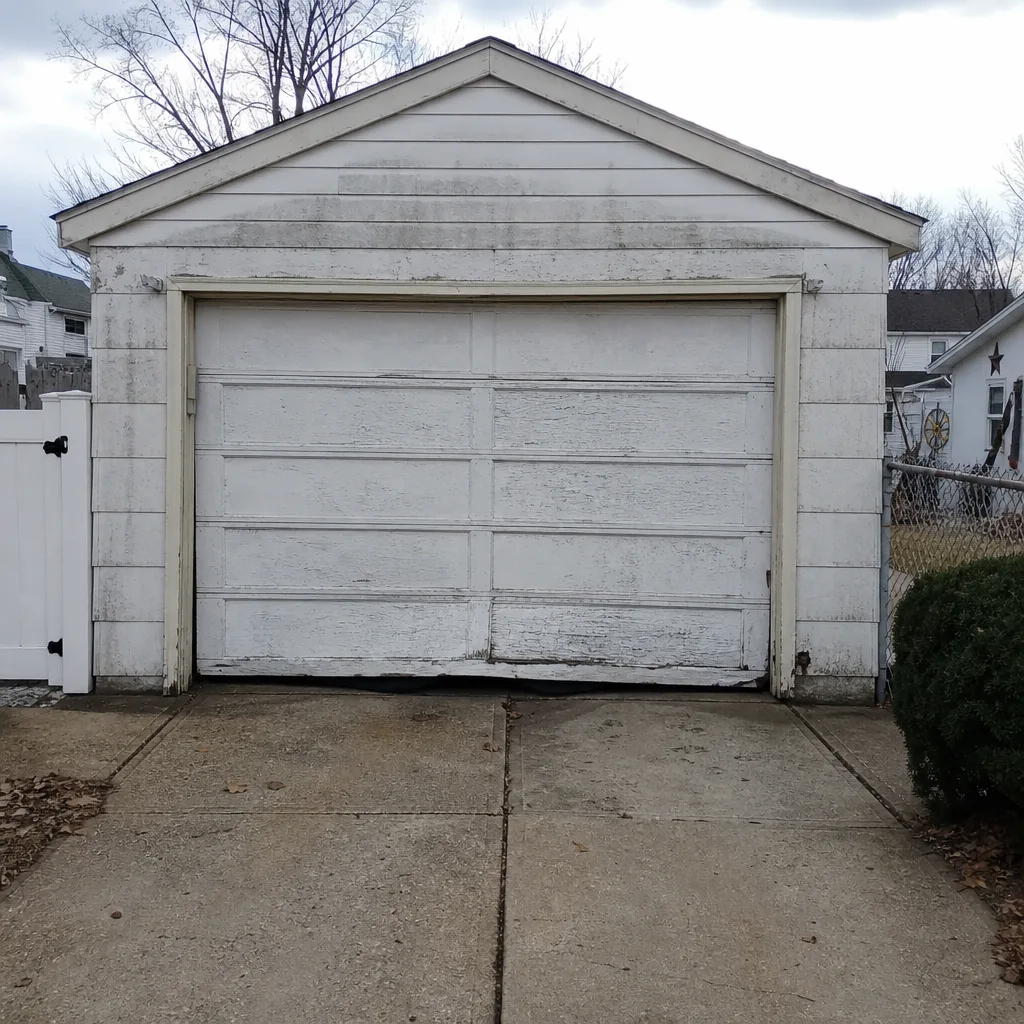 Before
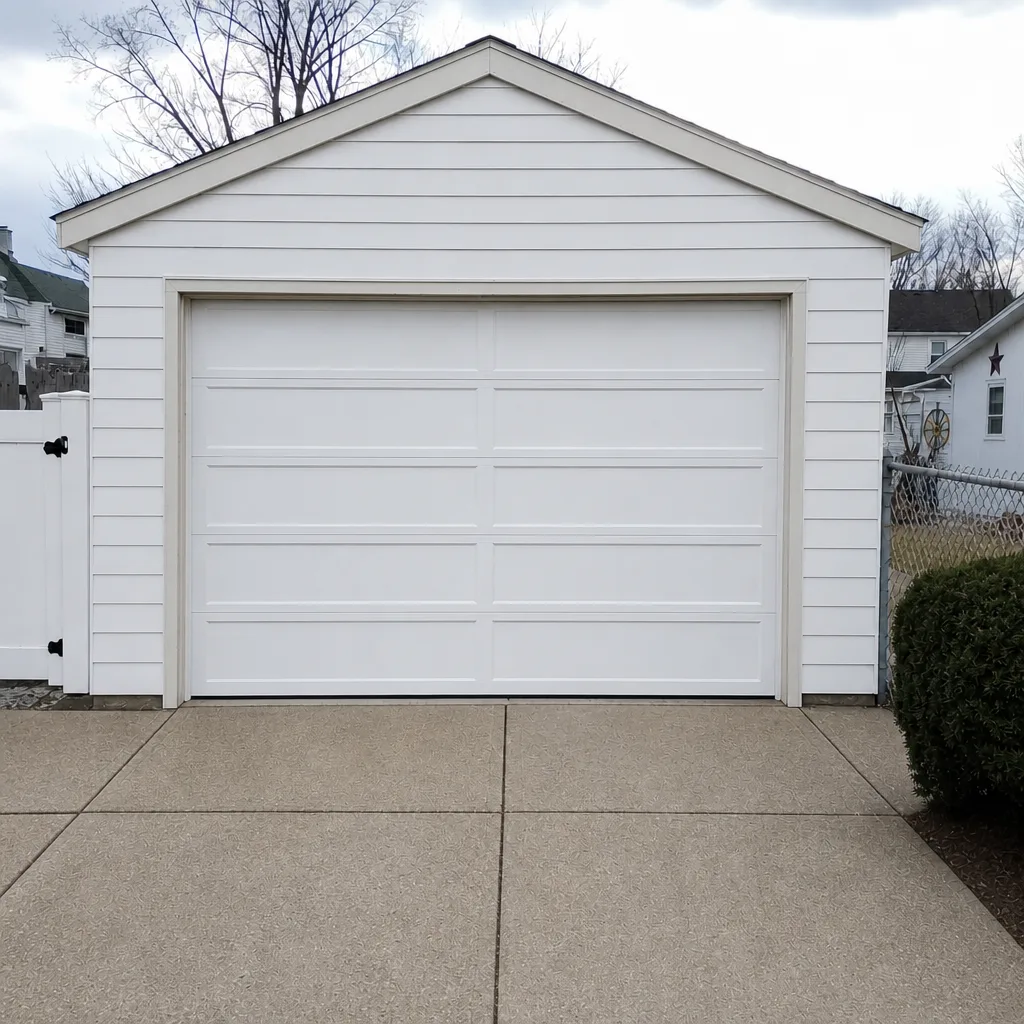 After
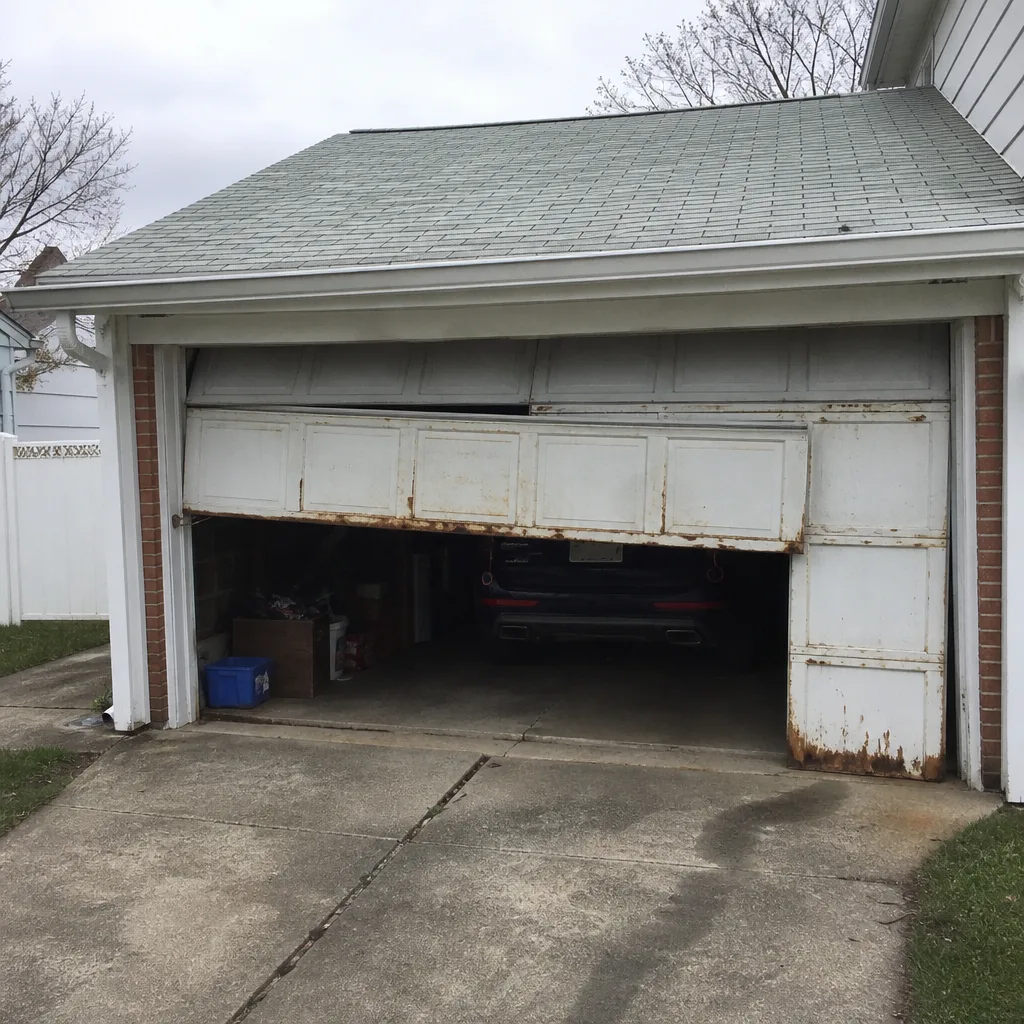 Before
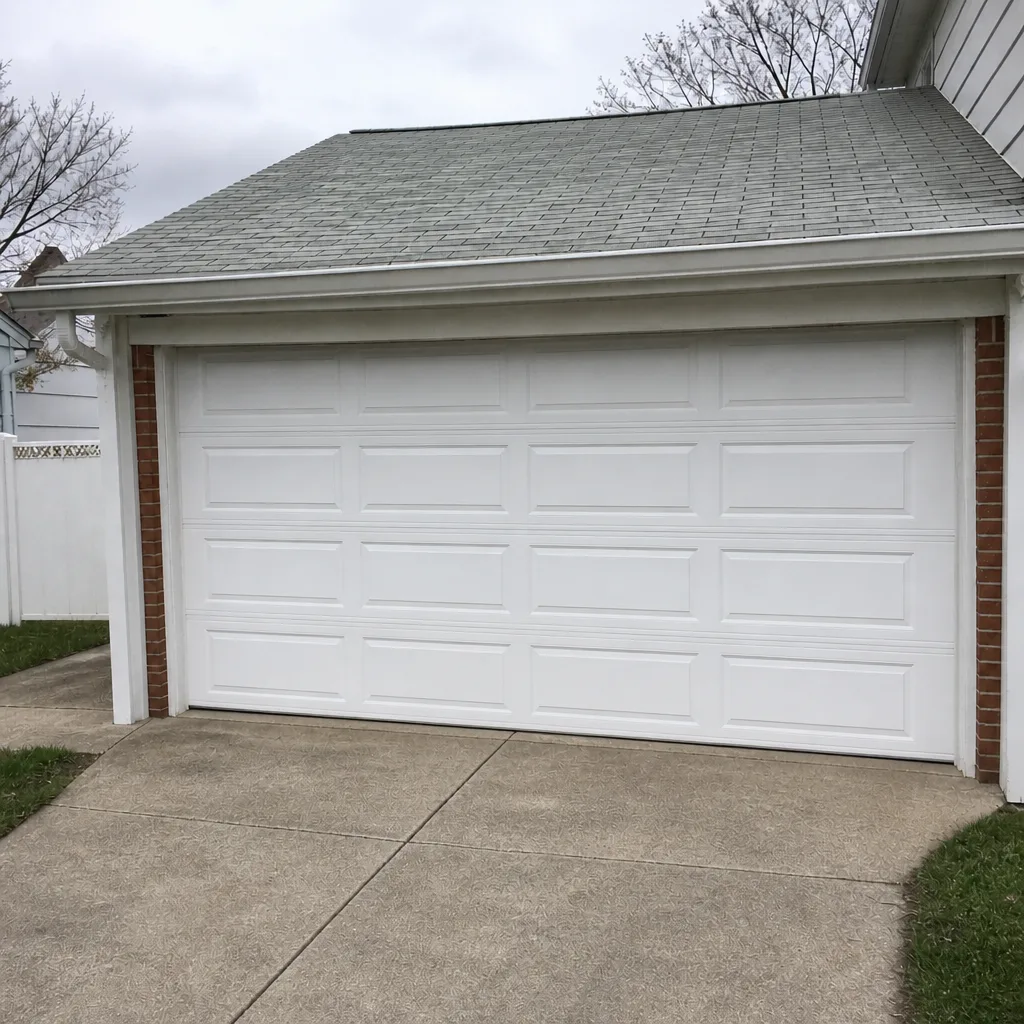 After
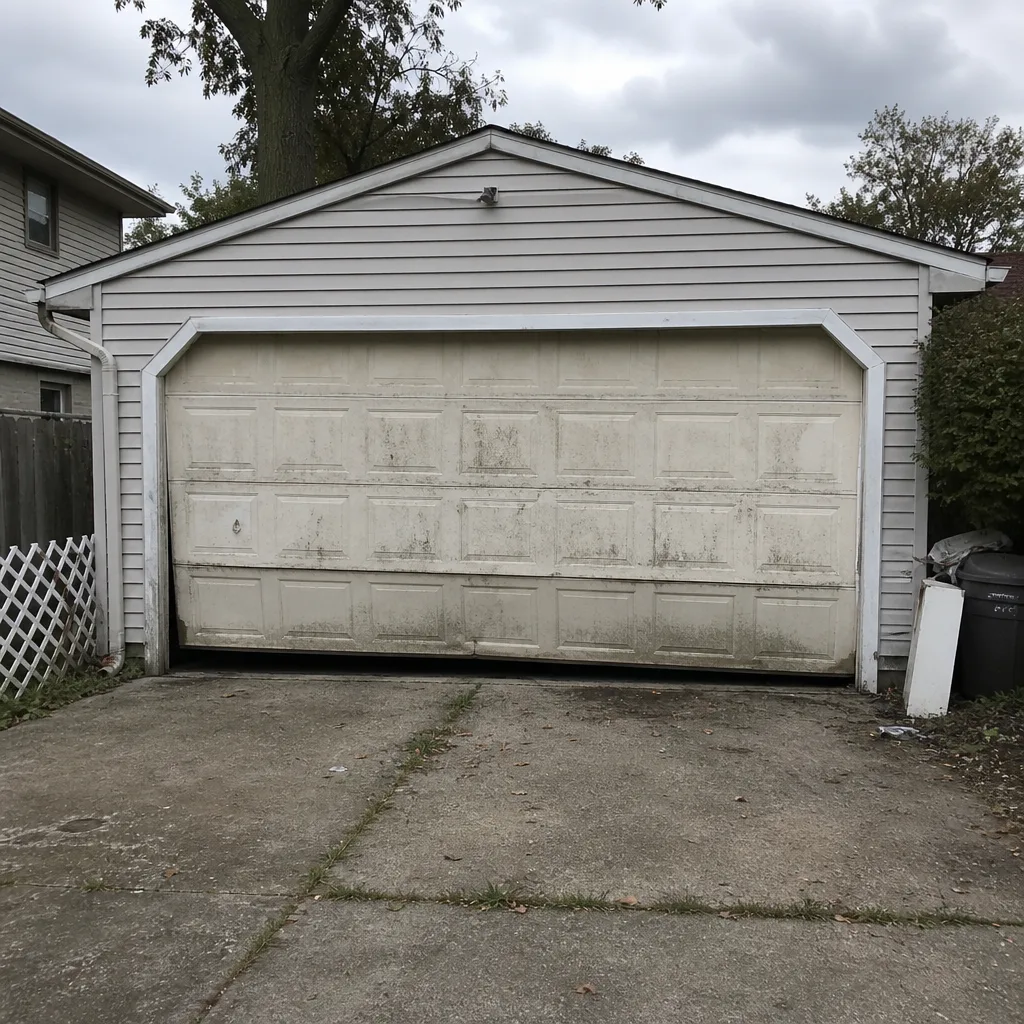 Before
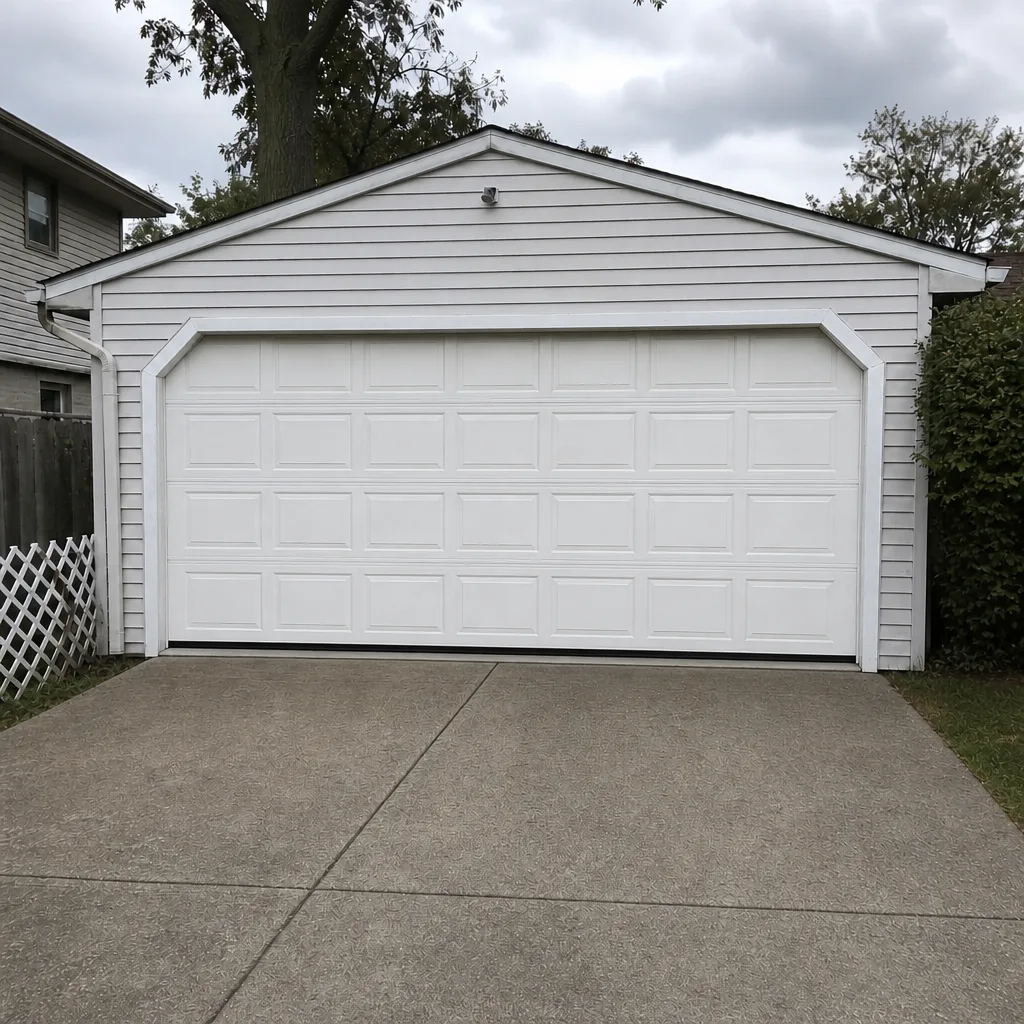 After
When to Call a Professional
Some jobs are safe for a homeowner and some aren’t. Lubrication, wiping down the track, sight-checking a seal, and running the force-limit test are all do-it-yourself items. What isn’t: adjusting or replacing torsion springs, rewinding a cable, straightening a bent track, replacing a logic board, or chasing an opener that reverses for no reason. If the door won’t close because the spring has snapped, if the opener runs but the door doesn’t move, if the door is off the track, or if the door is stuck halfway and blocking your car, that’s the time to call. Our technicians have up to 11 years of experience and can diagnose the problem and give you a written estimate before any work starts. Levittown Garage Door Repair Experts offers free estimates in Levittown. Call (877) 770-2029.
Frequently Asked Questions
Twice a year is the right rhythm here: a spring and cycle check in early spring, and a full lubrication and force-limit test in the fall. Add a weatherstripping check before summer humidity and a quick monthly look at rollers and hinges.
A visible gap between the coils is the clearest sign, and it means the spring has already failed. Beyond that, the most reliable indicator is your cycle count against the spring’s rating. If you’re within a year of the rated life, plan the replacement.
Lubricating the spring with a spray grease along the coils is safe. Adjusting, winding, or removing the spring is not, because it’s under extreme tension. Only a trained technician should touch the winding side of the assembly.
Spring replacement is the most common, followed by opener repair and bottom-seal replacement. The spring cluster in late winter is our busiest stretch, largely because lubrication gets skipped the fall before.
Most likely the force limit is set too low, a safety sensor is misaligned, or a spring has partially failed. Don’t keep forcing it. Run the force-limit test first, and if it doesn’t resolve, call for a diagnostic.
Yes. We service LiftMaster, Chamberlain, Genie, Clopay, Amarr, Wayne Dalton, Craftsman, and Raynor. We work on the system you already have rather than pushing a brand switch. Call (877) 770-2029 for a free estimate.
The Bottom Line
A garage door is a wear system, not a permanent fixture, and the parts that fail first in Levittown do so on a known schedule. The checklist here is simple: check the torsion spring twice a year, lubricate with the right grease in the fall, inspect the bottom seal before summer humidity, and run the force-limit test once a year. Everything else is hardware that announces its failure with noise or looseness before it breaks. Do the two-session-a-year routine and most of the emergencies disappear. When something needs a trained hand, our team is one call away at (877) 770-2029.
Written by the team at Levittown Garage Door Repair Experts.