Last updated November 20, 2026
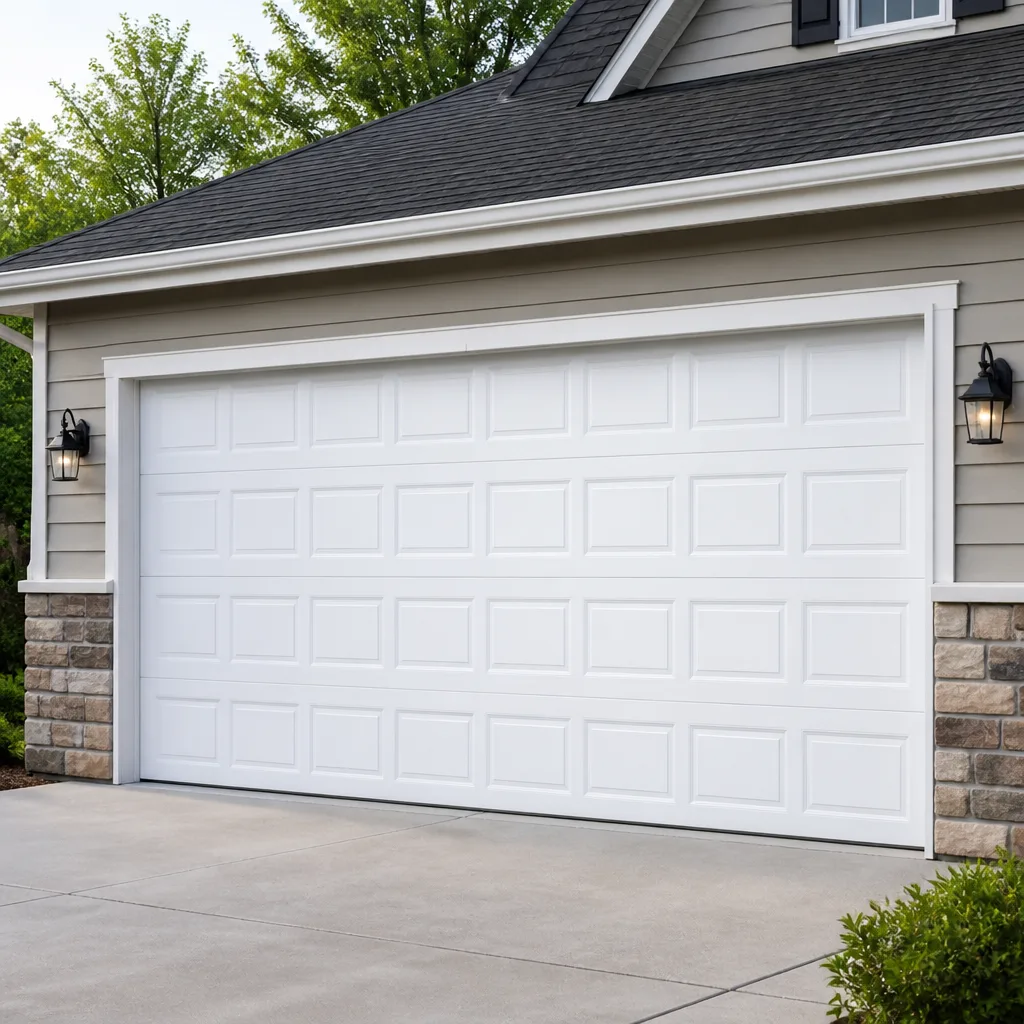 Raised-panel steel
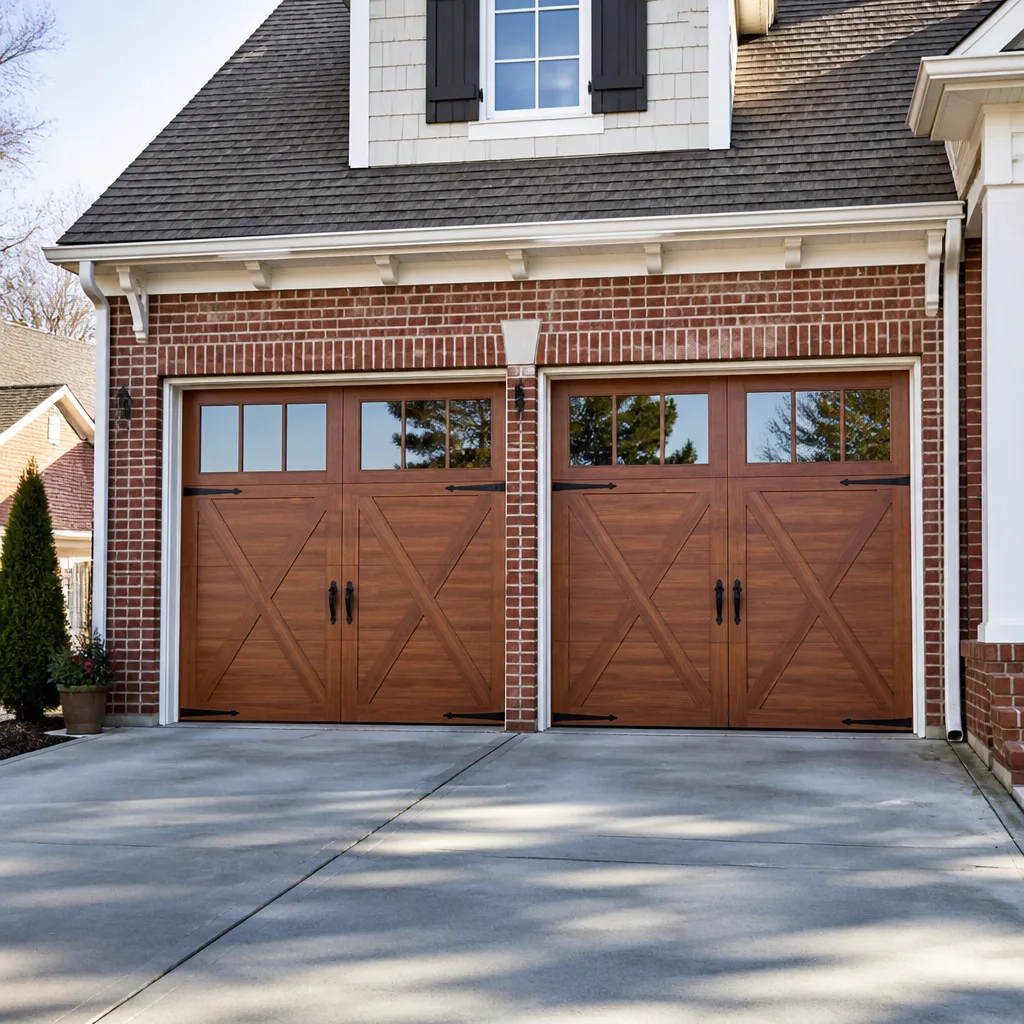 Carriage house
 Modern flush
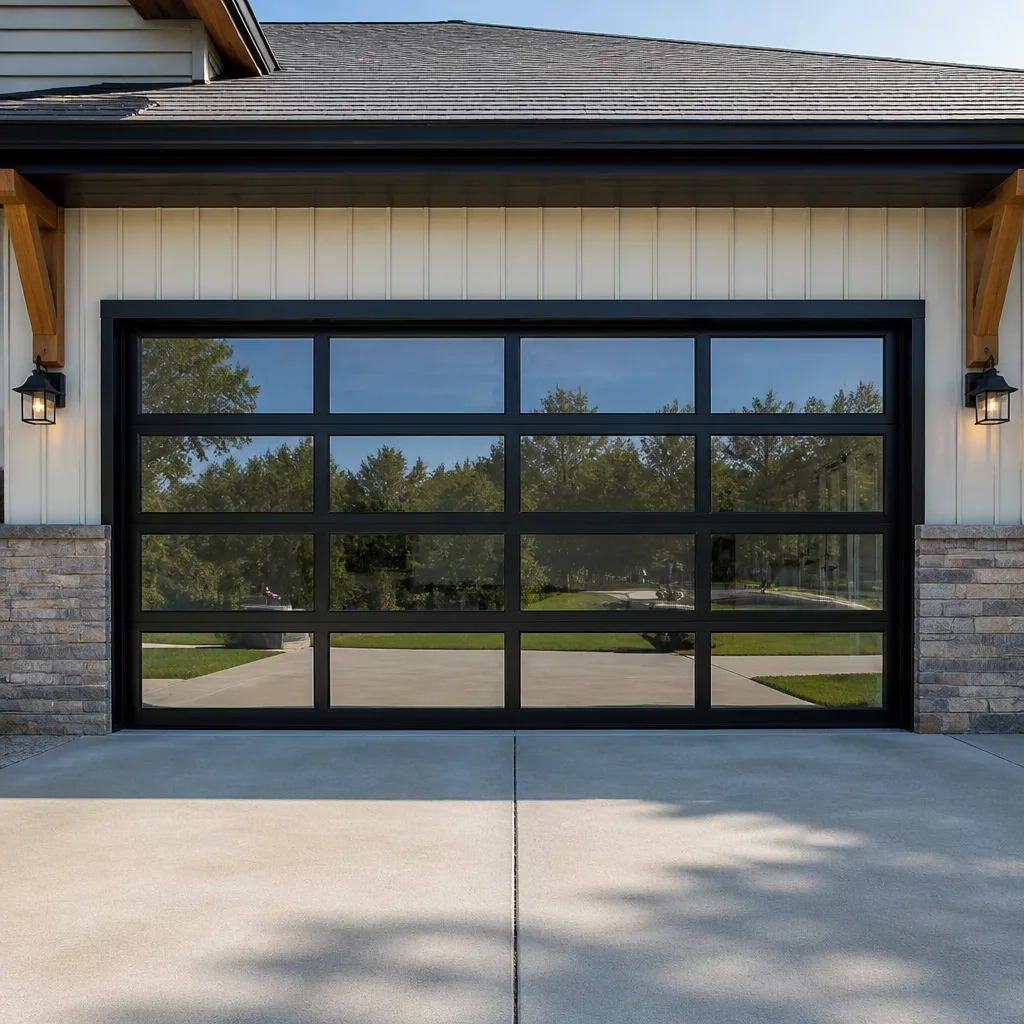 Full-view glass
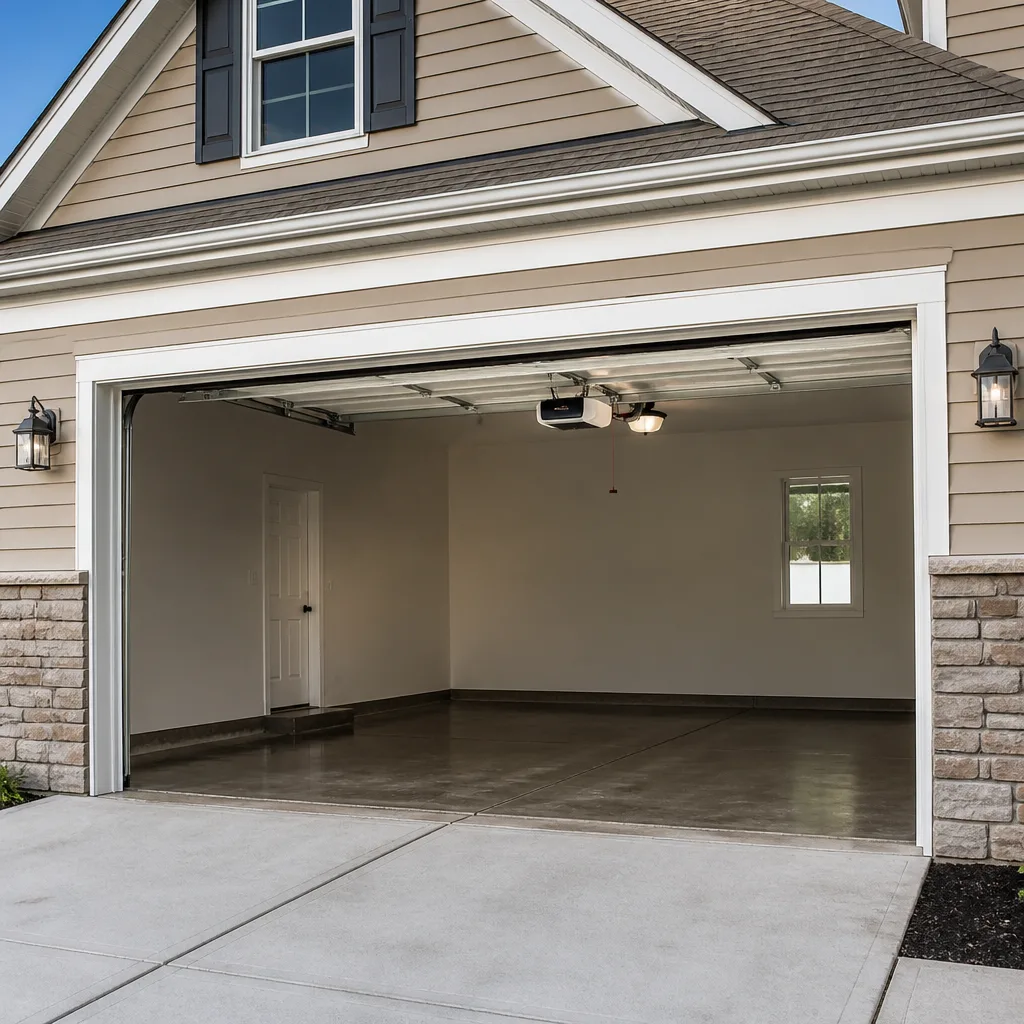 LiftMaster openers
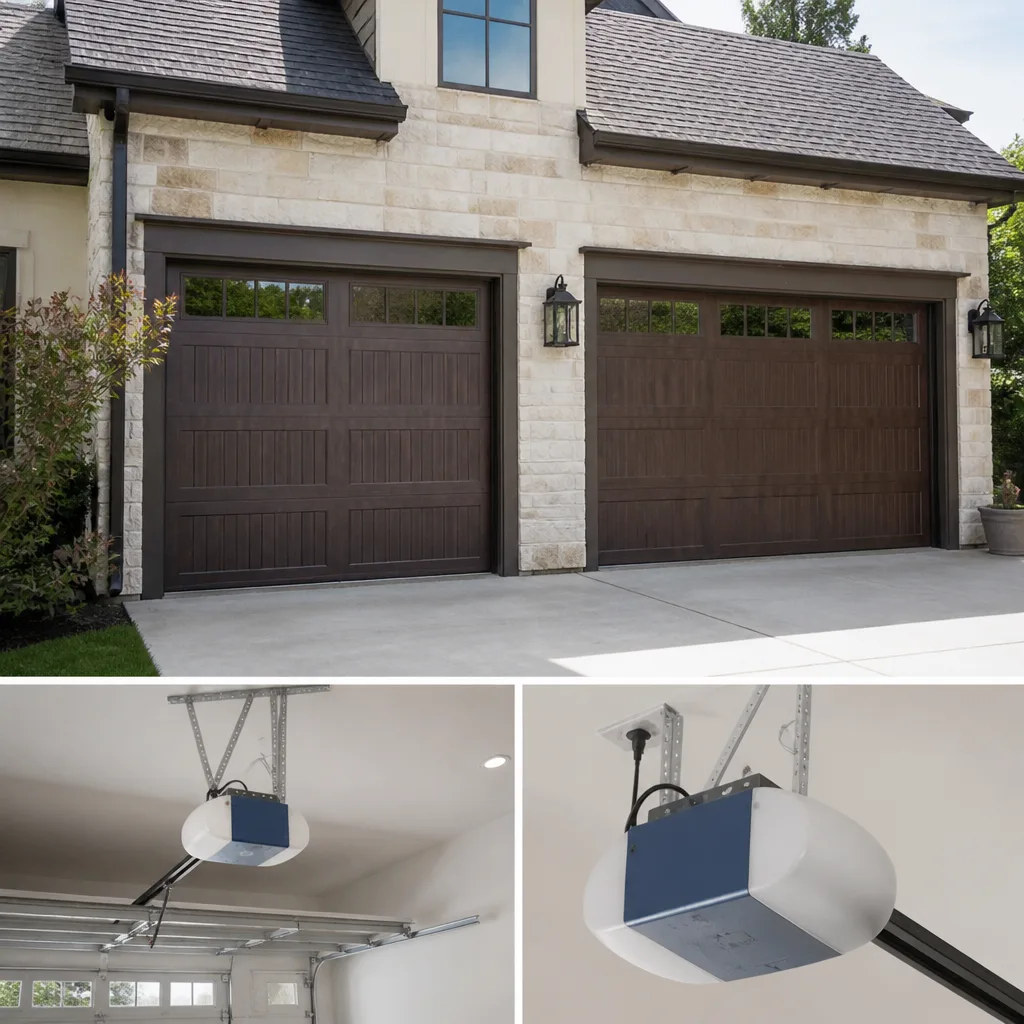 Chamberlain openers
Full 25-point door and opener safety check with every visit - springs, cables, rollers, tracks, and your LiftMaster or Chamberlain opener included
You get a price before we start. It does not change when the pro arrives.
Get your free estimateGarage Door Permits, Codes & Inspections in Levittown, NY: What You Need to Know
Most Levittown homeowners assume any garage door work needs a permit, and the opposite assumption – that none of it does – is just as common. Both are wrong, and the truth sits in a middle ground that depends on what’s actually being changed. A like-for-like torsion spring swap on your existing door usually needs no paperwork at all. Swap a section of panels, upgrade the opener, or replace the whole door, and the Town of Hempstead’s building department may want to see a permit before the work begins. That distinction matters at resale, at inspection, and when your insurance carrier asks how the door was installed. In this guide we’ll walk through the specific triggers that pull a job into permitting territory, what the New York State Energy Code asks of you when you replace a door on a conditioned garage, how wind-load ratings work in Nassau County, what an inspector actually looks at, and how unpermitted work surfaces at a title search. Levittown sits squarely in the middle of all of this, and we’ve fielded these questions from homeowners here more times than we can count.
Quick Answer
In Levittown, a straight repair – replacing a broken spring, fixing a snapped cable, swapping a worn roller or a failed opener motor with a like-for-like unit – typically does not require a building permit. Replacing the entire garage door, changing the door’s size or opening, converting a manual door to an automatic one for the first time, or altering the structural framing around the opening usually does require a permit from the Town of Hempstead Building Department. When in doubt, call the department before you sign a contract, and ask the question in plain terms: “I’m replacing a 16-foot door with a same-size door – do I need a permit?” The answer you get on that call is the one that governs your job.
Styles & brands we work with
- Raised-panel steel
- Carriage house
- Modern flush
- Full-view glass
- LiftMaster openers
- Chamberlain openers
Table of Contents
- What triggers a garage door permit in Levittown?
- What garage door work is exempt from permitting?
- How does the New York State Energy Code apply to a new garage door?
- What wind-load rating does Nassau County require?
- What does the inspection actually check?
- How does unpermitted work show up at a title search?
- What does it cost to remediate an unpermitted job?
- How do you pick a contractor who handles the paperwork correctly?
What Triggers a Garage Door Permit in Levittown?
The line between “repair” and “alteration” is where permits live, and it’s not always obvious from the outside. A useful rule of thumb: if the work changes the physical dimensions, the door system type, or the structural attachment to the house, treat it as permitted work. If it merely restores the door to the condition it was already in, it’s usually exempt. The Town of Hempstead Building Department is the authority that decides, not a contractor and not a brochure. We always recommend confirming scope in writing with the town before work starts.
Here are the situations we most often see pull a Levittown garage door job into permitting territory:
- Full door replacement. Removing an existing door and installing a new one of the same opening size is typically a permitted job, because the door’s certification, wind-load rating and labeling change with the unit.
- Changing the opening size. Widening from a single to a double door, raising the header, or altering the rough opening touches structural framing and always qualifies as permitted work.
- First-time automatic opener installation. Converting a manual door to an automatic LiftMaster or Chamberlain opener is a mechanical system change, and towns typically want to see it.
- Replacing a manual door with an automatic one as part of a new-door job. This bundled scope combines two permit triggers.
- Changing door type. Moving from a sectional to a roll-up, or from a solid to a windowed door, changes the door’s structural and wind-load performance.
- Structural reinforcement. Adding angles, brackets, or re-anchoring tracks after a door failure caused damage to the framing.
What most homeowners miss: an opener swap on an existing automatic door with a same-spec unit is usually fine without a permit. Replacing an opener whose drive type changes the door’s operation (belt to chain, jackshaft to trolley) is more likely to raise the question. Our advice: don’t guess. One phone call saves a headache later.
What Garage Door Work Is Exempt From Permitting?
Most of what happens to a Levittown garage door day to day needs no paperwork. A torsion spring that snapped, a cable that popped off its drum, a bent roller, a remote that stopped talking to the wall unit, a photo-eye alignment, a stripped gear in a Genie opener – these are repairs that restore function without changing the door’s structural identity or safety rating. That’s the reason most of what we handle is fast, simple and permit-free.
The exemption list is longer than most people expect:
- Torsion spring replacement on an existing door (the spring is a wear part, like a brake pad)
- Extension spring replacement on an existing door
- Cable, drum and roller replacement
- Hinge and bracket replacement with like-for-like parts
- Opener motor, logic board, drive belt, chain, or gear replacement on an existing opener
- Remote, keypad and wall-button replacement or reprogramming
- Safety sensor alignment and replacement
- Weather seal and bottom-rubber replacement
- Panel replacement in a sectional door, provided the panel is a direct factory replacement for the existing model
- Track straightening after a minor impact, when no framing is altered
Panel replacement deserves a note. Factories for Clopay, Amarr, Wayne Dalton and similar brands build panels to a specific model code, and matching the code means matching the door’s original certification. When the panel comes from the same model line, we treat it as repair. When it doesn’t match, the door’s performance characteristics change, and the job may need a permit. If you’re unsure which camp you’re in, our team can look up the model number on your existing door and tell you straight. You can read more on our garage door repair page about the sorts of jobs that stay out of permitting territory.
How Does the New York State Energy Code Apply to a New Garage Door?
If the garage is conditioned – meaning it’s heated, cooled, or sealed as part of the home’s thermal envelope because it shares a wall with living space, has a ducted register, or has finished space above it – then a new garage door falls under the New York State Energy Code’s envelope requirements. In Levittown, many of the postwar capes and ranches have garages that share a wall with the house without being fully conditioned. The deciding question is whether that shared wall is insulated and air-sealed. If yes, the door is part of the envelope. If the garage is a true open-to-the-outside space with no heat, the energy code usually doesn’t apply.
The practical implication is that a new door on a conditioned garage needs to meet a minimum thermal performance, usually stated in terms of U-factor or R-value on the manufacturer’s spec sheet. In our experience, most mid-range insulated doors clear this comfortably. What catches homeowners is buying a basic uninsulated steel door to save a few hundred dollars, and then finding out at inspection that the door isn’t listed as compliant for a conditioned application. Two things to ask your installer before ordering:
- Is this door rated for a conditioned-space application, and can I see the spec sheet that says so?
- Will the permit application list the door’s thermal rating so the inspector can verify it on the label?
The label matters. Manufacturers attach a permanent label inside the door that states its model, its ratings, and its certification. Inspectors look for that label, and inspectors will flag a door that has no match to the application. Our experience with garage door opener repair and full installations has taught us that label is the single most-checked piece of paperwork on a new-door inspection.
What Wind-Load Rating Does Nassau County Require?
Nassau County buildings, including Levittown, follow the wind-load provisions of the New York State Uniform Fire Prevention and Building Code, which draws from the International Residential Code. The required wind speed for design purposes is set by the code’s maps and by the specifics of the site – exposure category, building height and the door’s area. For most single-family homes in Levittown, doors meeting a design pressure in the range specified for that site are what the plan reviewer is looking for. The point isn’t to memorize a number. The point is that the door must come with manufacturer documentation that states the wind-load rating for the door’s size at that wind speed.
Here’s what this looks like in practice:
- Standard non-rated doors are common replacements in low-rise residential settings, but they aren’t automatically accepted for every site. Ask before you buy.
- Wind-load rated doors come with a design-pressure (DP) rating on the label and spec sheet that ties back to the door’s size and the site conditions.
- Reinforced doors add heavier struts or deeper tracks, and are usually required for wider openings or homes on more exposed lots.
- Impact-rated doors add impact glass when the door has windows. Hail isn’t a common problem here, but wind-driven debris during a nor’easter absolutely is.
Overbuilding is a real temptation. Some homeowners are talked into a heavy commercial-grade door for a residential opening, and it costs them extra without any benefit. Matching the door to the code’s actual requirement is the right move; you want the rating that satisfies plan review, not the highest rating on the spec sheet. Your installed Raynor, Clopay or Amarr door should come with a manufacturer’s certificate that names the rated design pressure, and that certificate is the piece the town wants to see.
What Does the Inspection Actually Check?
The inspection of a new garage door installation is usually a short visit, but the small things matter. An inspector from the Town of Hempstead arrives at the address, checks that the permit is properly posted, looks at the installed door, and verifies that the door and its labeling match the permit application. What they’re checking against is the paperwork you submitted. If your application listed a specific model and a specific wind-load rating, the door on the house needs to show that same model and rating on the label. Less than that, and the inspection may fail on a technicality even when the installation is fine.
In our experience, here’s what an inspector typically looks at, versus what is generally handled through self-certification:
What the inspector inspects directly
- Posted permit and approved plans. The permit has to be on-site and visible.
- Door model label. The manufacturer’s label inside the door frame must match the model and ratings on the permit.
- Wind-load documentation. The door’s design-pressure rating must match the plan.
- Structural attachment. Track mounting into the framing, the header’s condition, and the spring anchor plate all get a look.
- Clearance and safety. The photo-eye sensors, the auto-reverse function, and the manual release all get tested.
- Energy code compliance. On a conditioned garage, the thermal rating on the label should match the plan.
What’s generally self-certified by the installer
- Torque on the fasteners inside a factory-built assembly
- Spring wire diameter and cycle rating on a new door’s installed springs
- Weather seal fit
- Opener chain or belt tension
- Remote programming and travel-limit settings
The key takeaway: the inspector’s job is to catch mismatches between the paperwork and the door. An installer who knows the code usually passes the inspection on the first visit. An installer who doesn’t often costs the homeowner a re-inspection fee and some wasted weeks.
How Does Unpermitted Garage Work Show Up at a Title Search?
A title search is a records comparison, not a physical inspection. What the title company pulls is the property’s certificate of occupancy and permit history from the town. If the town shows a permit was pulled and closed, the work reads as completed legally. If the town shows no permit for a job that needed one, the search turns up a gap – and gaps are what buyers’ attorneys ask about. In our experience, garage door work isn’t flagged as often as a deck or a finished basement, but when it does surface, it surfaces at the worst possible moment: two weeks before closing, when everyone is already counting on the schedule.
The practical path forward, if you’re the seller:
- Pull your permit history from the Town of Hempstead before you list, so you’re not surprised.
- If the door was replaced without a permit, ask the town what it takes to legitimize the installation now. Often this is a permit application filed after the fact.
- Get a licensed contractor to sign off on the installation and provide the door’s spec sheet so the permit can be completed.
- Book the inspection. The inspector’s visit is the trigger that closes the permit.
- Provide the closed permit documentation to your attorney for the closing file.
If you’re the buyer, watch for it on your inspection report. A door that’s obviously newer than the rest of the house is a cue. A missing permit isn’t a deal-killer, but it is a negotiation lever, and remediation cost usually falls on the seller when the buyer asks.
What Does It Cost to Remediate an Unpermitted Job?
Cost to remediate an unpermitted garage door installation comes in three buckets: the town’s late permit fees, the cost of a contractor supplying the paperwork and sign-off, and the cost of any inspection correction the door needs to bring it into compliance. In general terms, permit fees themselves are modest, and the town’s fee schedule is published – what costs more is the time and effort to get an already-installed door certified after the fact. That’s why pulling the permit at the time of installation is so much cheaper than pulling it later.
The factors that drive remediation cost are predictable:
- Whether the door meets current code. A door that meets current code is easier to certify than a door that wasn’t rated for a conditioned-space installation.
- Whether the door’s manufacturer label is still attached. Missing labels mean calling the manufacturer for a replacement certificate.
- Whether the installation itself needs correction. Tracks not properly anchored, springs not rated for the door weight, or an opener installed without its safety sensors present will need to be fixed before sign-off.
- Penalty fees. Towns may add fees for permits issued after the work is complete. Ask the building department directly what applies.
- Inspection scheduling. The timeline depends on the town’s inspection calendar, not just yours.
We’ve walked this path with homeowners whose doors were installed by a prior contractor without the paperwork. The most reliable route: get the door’s spec sheet and manufacturer certificate, file the permit application, let the installation be verified, book the inspection, and get the permit closed. Doing this well before a sale puts the closing on a smoother track.
How Do You Pick a Contractor Who Handles the Paperwork Correctly?
The simplest test of whether a garage door contractor knows the Levittown permit landscape is the question you ask before signing: “Will this job need a permit, and are you going to pull it?” An experienced installer will answer immediately, and will know the difference between a torsion spring replacement (no permit) and a full-door swap (usually yes). A contractor who hesitates, or who tells you “you don’t need a permit for that” without qualifying when the town actually agrees, is a risk. The permit belongs in the contractor’s hands. It is not something a homeowner should be asked to pull on their own.
The checklist we’d hand any Levittown homeowner:
- Ask the contractor for the door’s specific model number before ordering.
- Ask whether the door meets the wind-load requirement for the specific opening and site. The contractor should be able to tell you the DP rating.
- Ask whether the garage is treated as conditioned space, and whether the door is rated for that use.
- Confirm in writing that the contractor will pull the permit and that the permit is included in the quoted price (not a surprise add-on).
- Confirm in writing that the contractor will handle the inspection and any corrections.
- Ask what happens if the inspector flags something – who pays for the fix, and how long it takes.
The quote should state clearly what the price covers, and the written estimate is the price – no invoice surprises. On a Levittown garage door repair job, the price is quoted and agreed before any work starts. Every spring, every opener, every door install, and every permit is priced on the estimate.
Common Mistakes to Avoid
- Assuming no permit is ever required for a door replacement. Many Levittown homeowners hear “replacing a door is fine” from a neighbor and skip the town call entirely. Same-size replacements usually need a permit, and finding out at a title search is a painful way to learn that.
- Pulling the permit in the homeowner’s name to save money. Permits filed by the homeowner can be harder to close when the installer’s paperwork isn’t part of the application. It also tends to raise questions about whether the installer was licensed to do the work at all.
- Buying a door without a wind-load rating for an exposed Levittown lot. Not every lot is created equal, and the code accounts for it. A door without a documented rating can’t be certified on the inspector’s visit.
- Replacing a door on a conditioned garage with an uninsulated model. The New York State Energy Code applies whether or not the homeowner was told about it. The savings on the door disappear at inspection.
- Discarding the manufacturer’s label inside the door frame. That label is the inspector’s single best piece of evidence. Removing it during installation, or peeling it, creates a costly certification problem.
- Using an out-of-area installer who doesn’t know Town of Hempstead procedure. Every town’s building department handles paperwork slightly differently. A local installer who knows the department’s expectations gets the job closed faster than someone who flies in from out of state.
- Skipping the permit because the work is “just a repair.” Sometimes it genuinely is. Often it’s not. Ask the town, and ask the contractor to confirm in writing. Two phone calls save weeks. We’ve covered the kinds of repairs that stay on the simple side over on our garage door spring repair page.
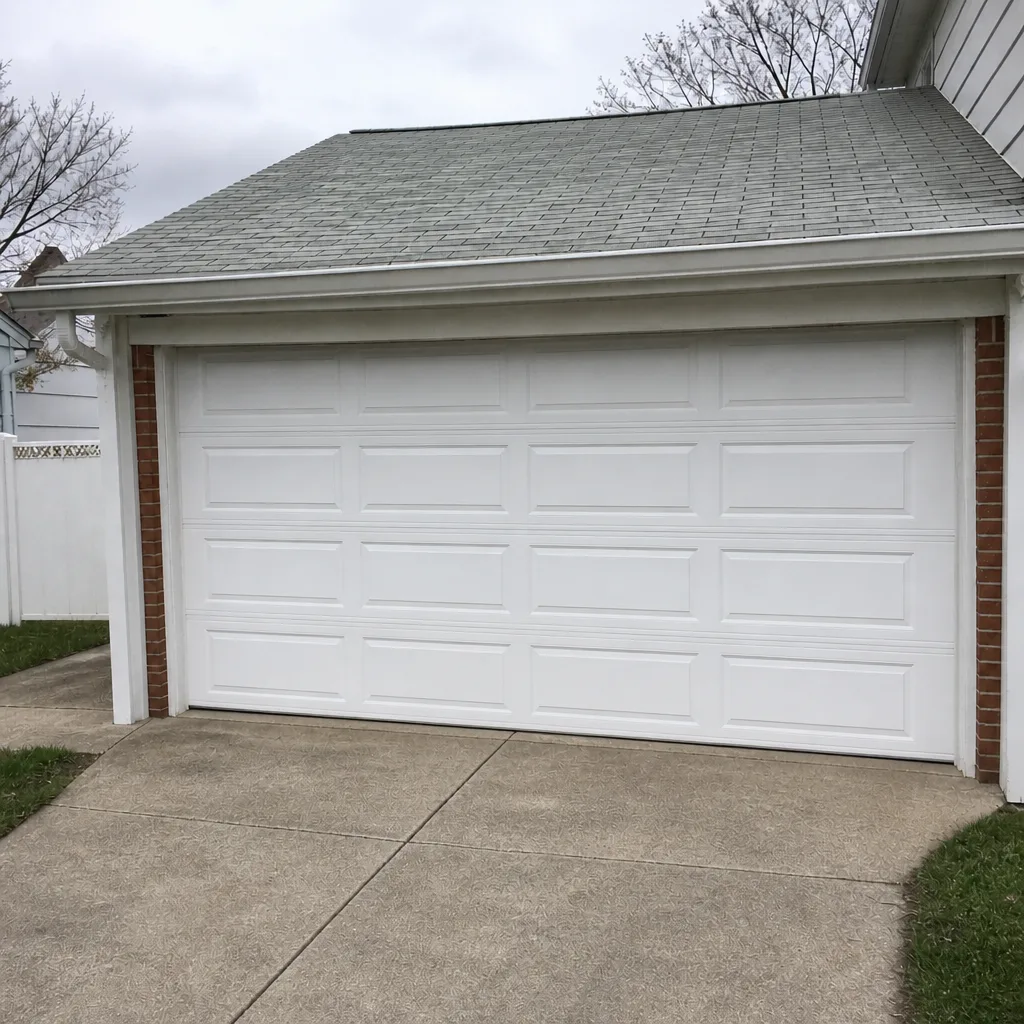
See the difference
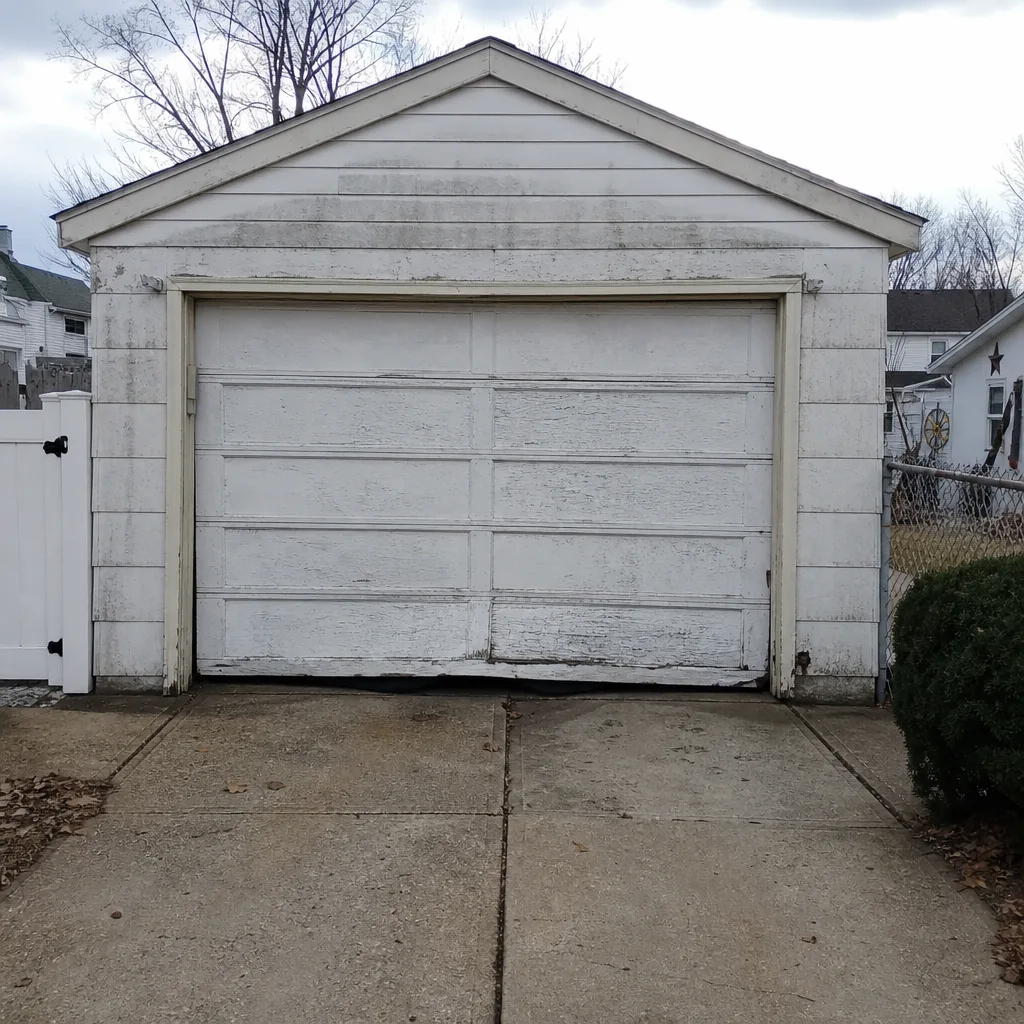 Before
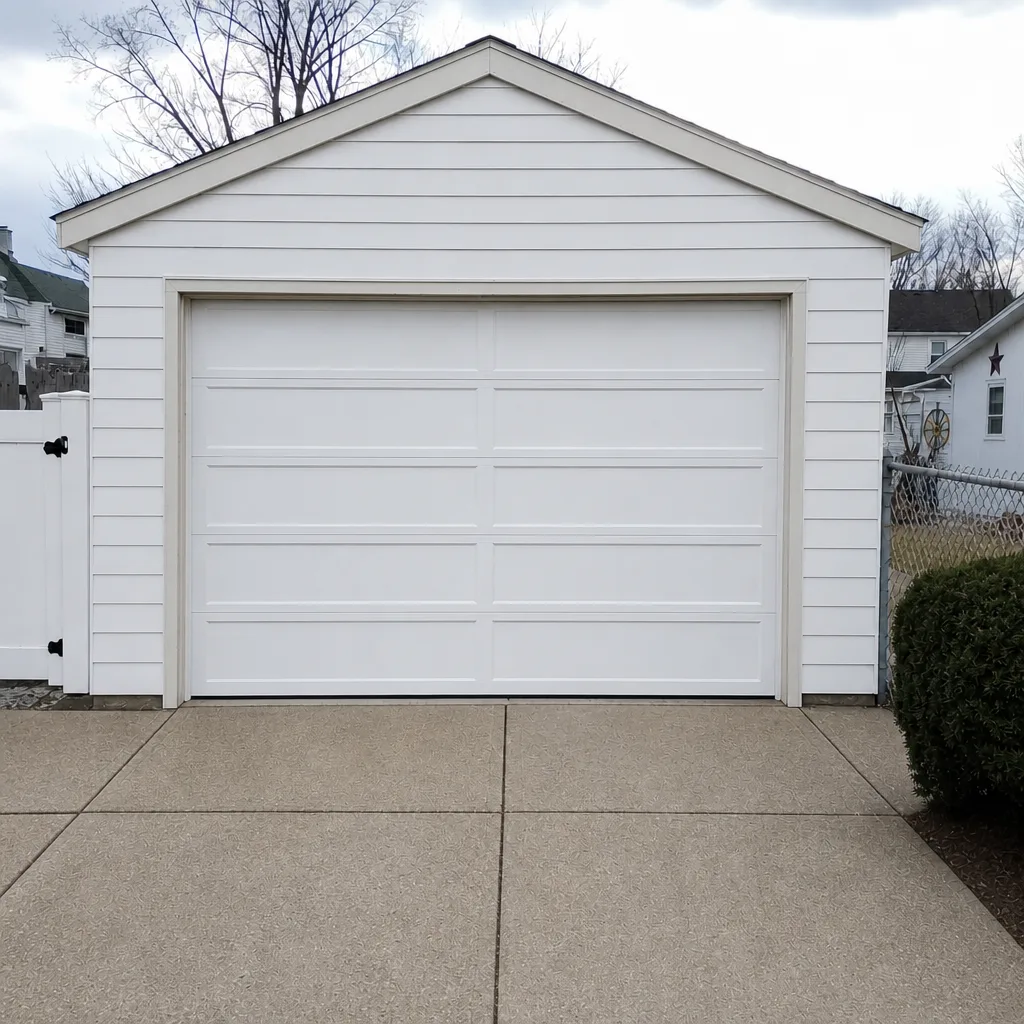 After
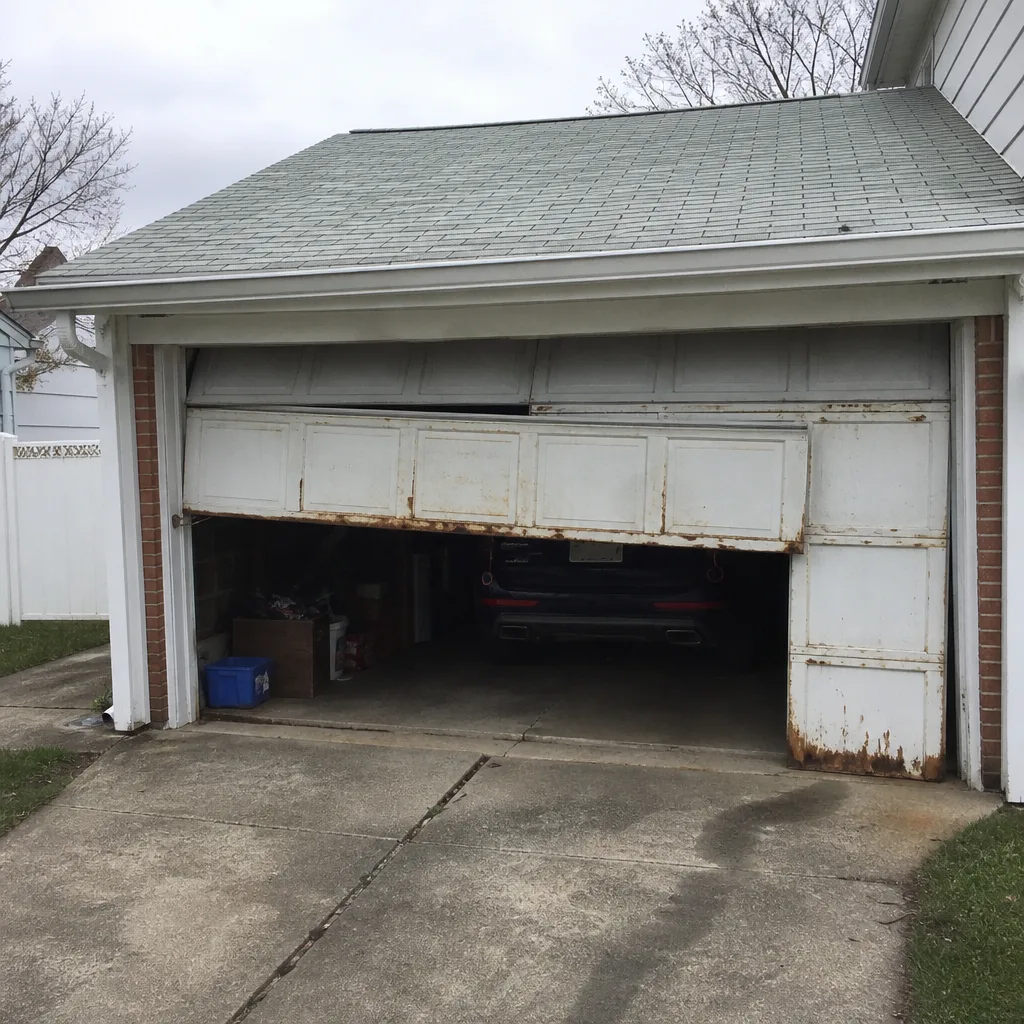 Before
 After
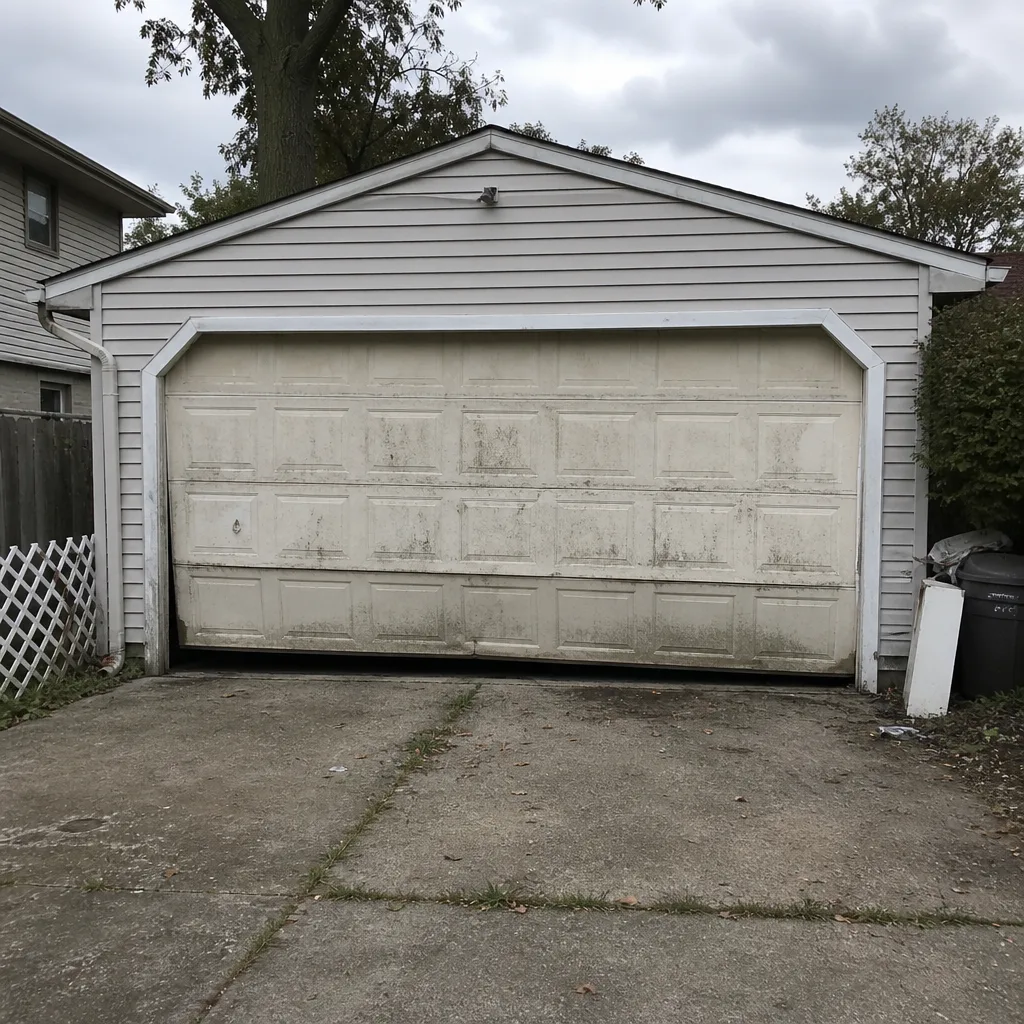 Before
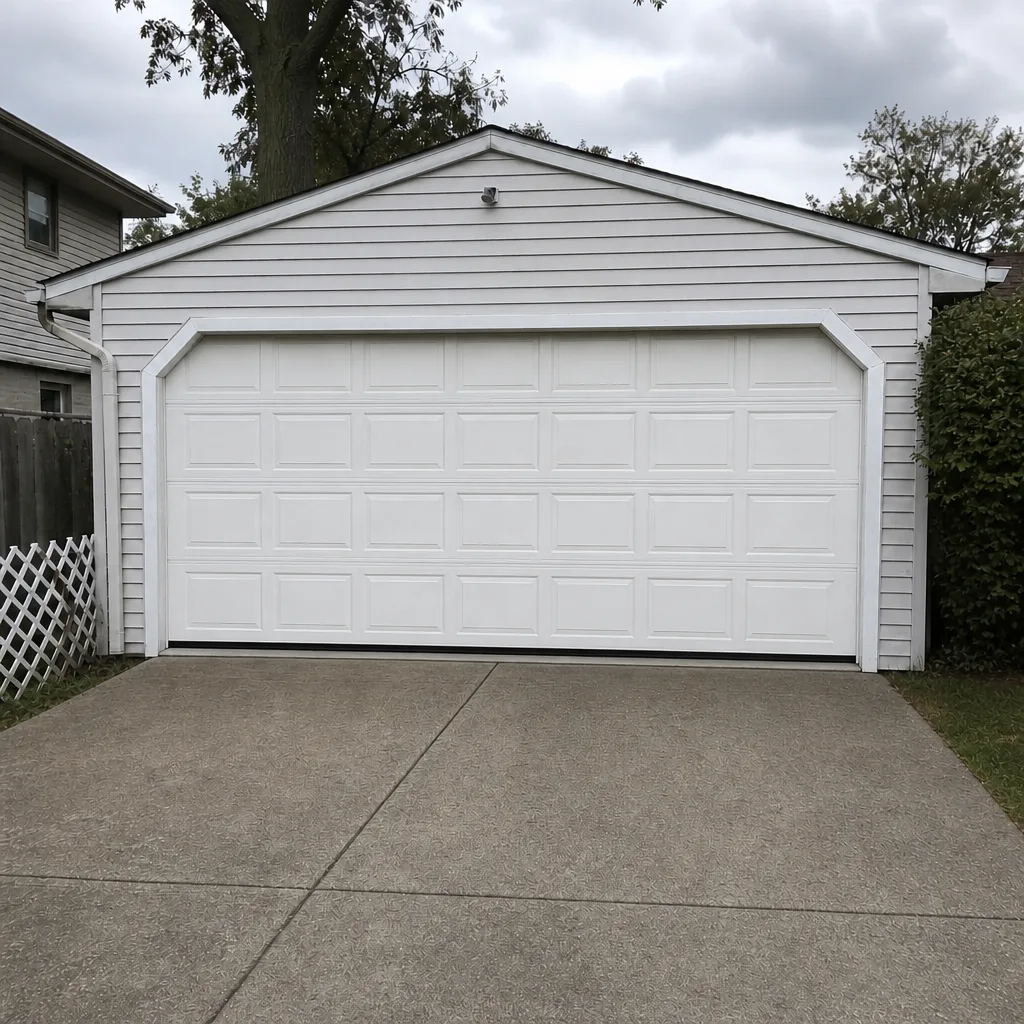 After
When to Call a Professional
Some things a Levittown homeowner can safely do without lifting a finger – the sensor realignment, the remote reprogram, the weather seal replacement. Some things they cannot. Torsion springs hold enough tension to cause serious injury, and the cables that wrap around the drums can snap with lethal force if the wrong part is released. If your door is off-track, if a spring snapped, if the opener motor hums without moving the door, or if a panel is hanging loose, stop operating the door and call a professional. Do not attempt the repair yourself, and do not let a neighbor “have a go at it.” We’ve seen enough damaged springs and bent tracks to know that the risk isn’t theoretical. Levittown Garage Door Repair Experts offers free estimates in Levittown – call (877) 770-2029. Our technicians have up to 11 years of experience across LiftMaster, Chamberlain, Genie, Raynor and other major brands, and every price is quoted and agreed before any work starts.
Frequently Asked Questions
In most cases yes. A full door replacement usually requires a permit from the Town of Hempstead Building Department, and the permit should be pulled by the licensed contractor doing the installation, not the homeowner. Call the department directly with your address and the door’s exact make and model to confirm scope before ordering. Call (877) 770-2029 for a free estimate on the installation itself – we handle the paperwork as part of the job.
No. Spring replacement on an existing door is treated as a repair, not an alteration, and generally does not require a permit. The same holds for cable, roller, hinge and opener-motor replacement on an existing opener. Torsion springs are still dangerous to work on, so call a trained technician: reach us at (877) 770-2029 for a same-day service call.
The rating depends on the specific site – exposure, building height, and door size – under the wind-load provisions of the New York State Uniform Fire Prevention and Building Code. Ask your installer to provide the manufacturer’s certificate of design pressure for the exact door being installed, and have it included on the permit application. If a contractor can’t produce that document, call us at (877) 770-2029 and we can spec the door for your lot.
An unpermitted installation can surface during a title search at sale, and get raised by a buyer’s attorney. The fix is usually to file a permit application after the fact, have the installation verified by a licensed contractor, produce the manufacturer’s label and spec sheet, and book the inspection to close the permit. Do this before listing, not after. Call (877) 770-2029 if you need a contractor’s sign-off on an existing install.
Yes. For new door installations and other permitted work, the permit belongs in the contractor’s hands. We file it, submit the door’s spec sheet and wind-load documentation with it, schedule the inspection, and make any corrections the inspector flags. The permit and inspection are quoted on the estimate before any work starts. Call (877) 770-2029 for a free estimate that includes the permit scope.
A like-for-like opener replacement on an existing automatic door usually needs no permit, while a first-time automatic opener installation, or a swap that changes the door’s operation (belt to chain, trolley to jackshaft), is more likely to trigger one. When in doubt, call the Town of Hempstead Building Department with the specific model you’re considering. For the install itself, call (877) 770-2029 – we work on the LiftMaster, Chamberlain and Genie systems you already own.
The Bottom Line
Garage door permitting in Levittown comes down to scope, not sentiment. A spring, cable, roller, sensor or opener repair is usually exempt. A full door replacement, a change in opening size, a first-time automatic opener, or any alteration to the framing typically needs a permit from the Town of Hempstead Building Department – and if your garage is conditioned, the new door also needs to clear the New York State Energy Code, and meet the wind-load provisions of the state’s building code. The permit belongs with the contractor, and the written estimate should include it. If you’re not sure which side of the line your job falls on, don’t guess. Ask the town, and ask us. A few phone calls before the work starts will save weeks at closing, and a door that’s documented properly will protect you at every inspection that follows.
If you need garage door work in Levittown, whether it’s a routine spring repair, a same-day emergency call on a door that won’t close, or a full door installation with the permit handled correctly, we can help. We work on whatever brand and model is already on your home – Clopay, Amarr, Wayne Dalton, LiftMaster, Chamberlain, Genie and Raynor included – and we don’t steer you toward a replacement when a targeted repair does the job. Call (877) 770-2029 for a free estimate. Our team is here for Levittown Garage Door Repair Experts and every homeowner we serve in the community, and we’ll get you a clear, written price before any tool touches your door.
Written by the team at Levittown Garage Door Repair Experts.