Last updated November 20, 2026
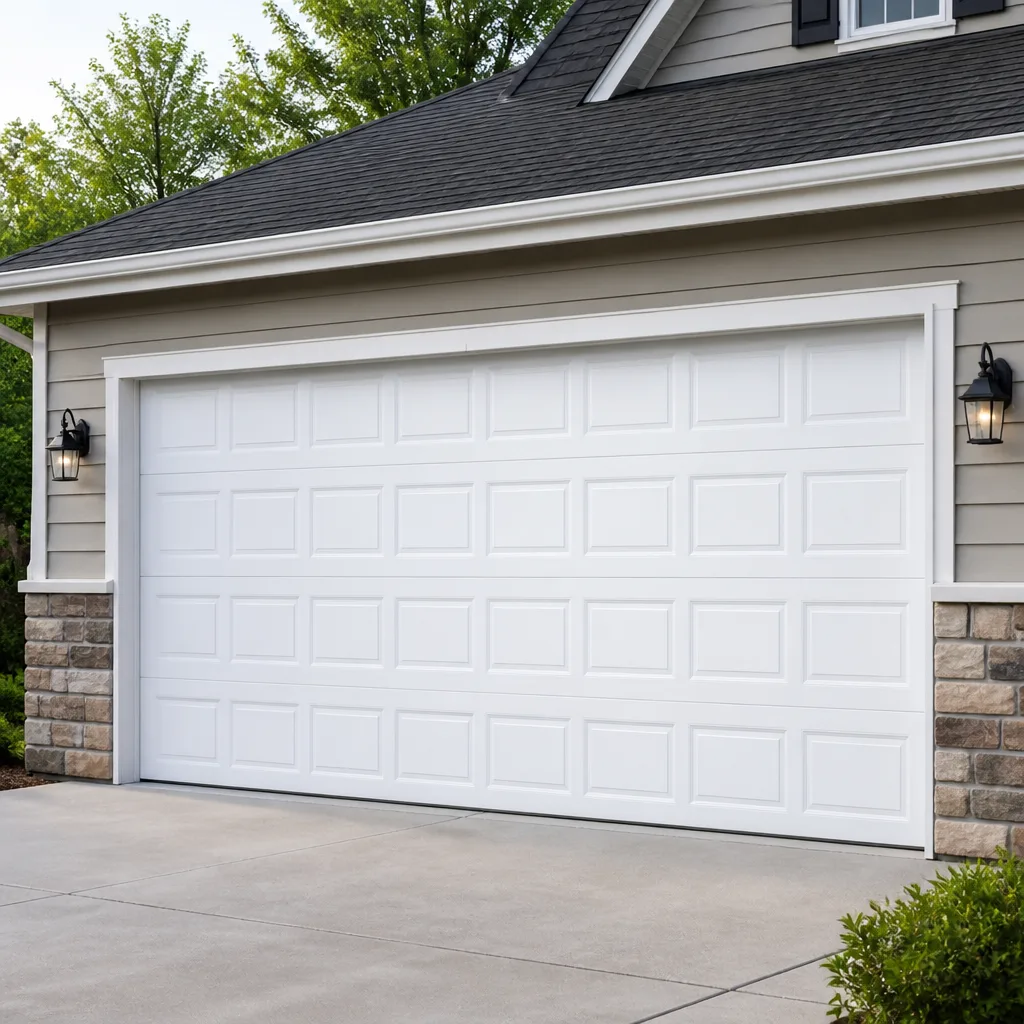 Raised-panel steel
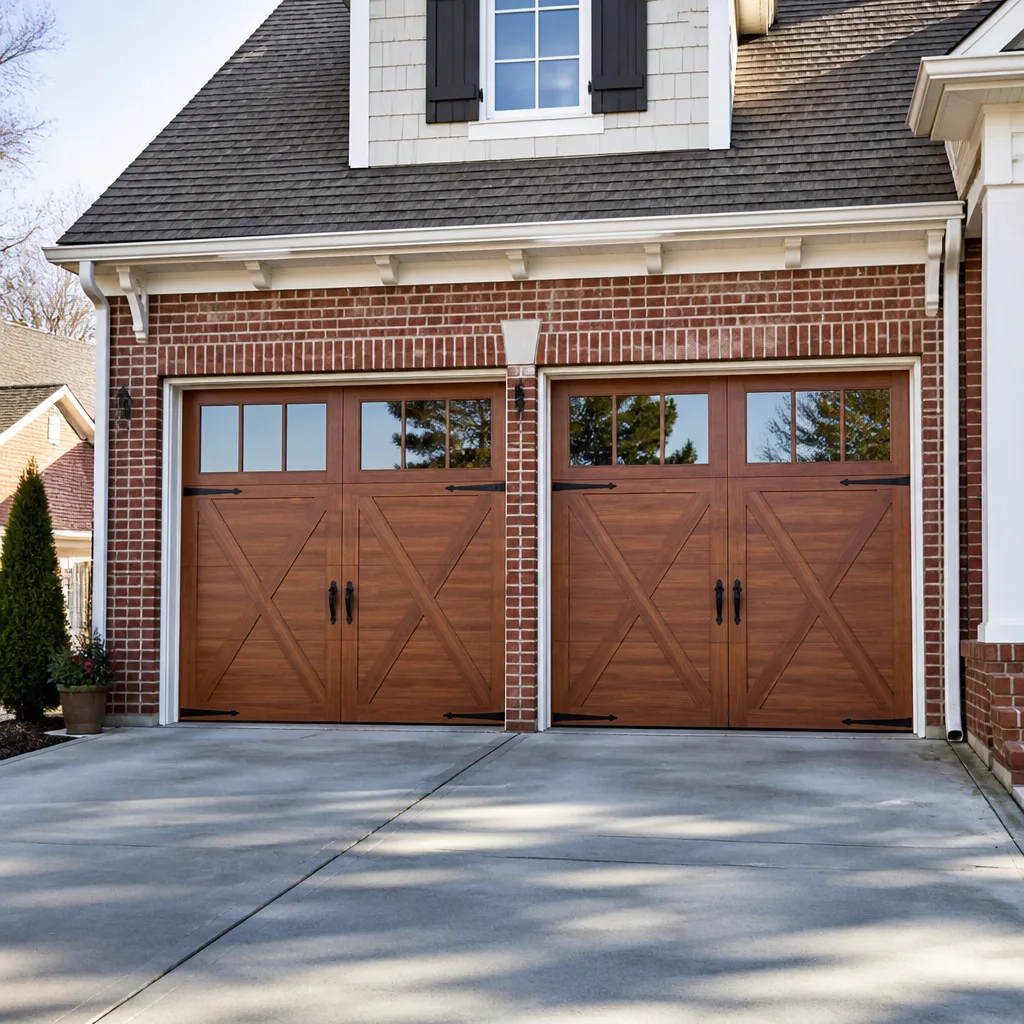 Carriage house
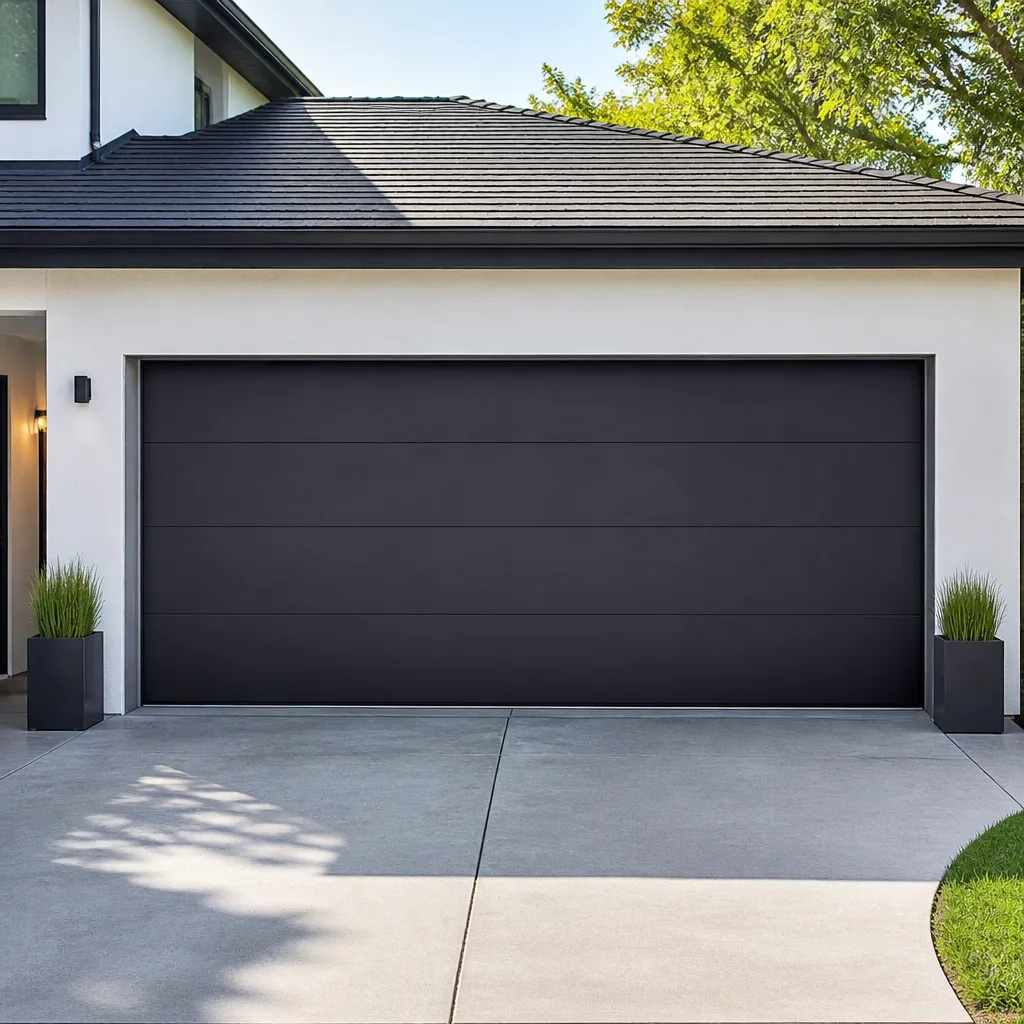 Modern flush
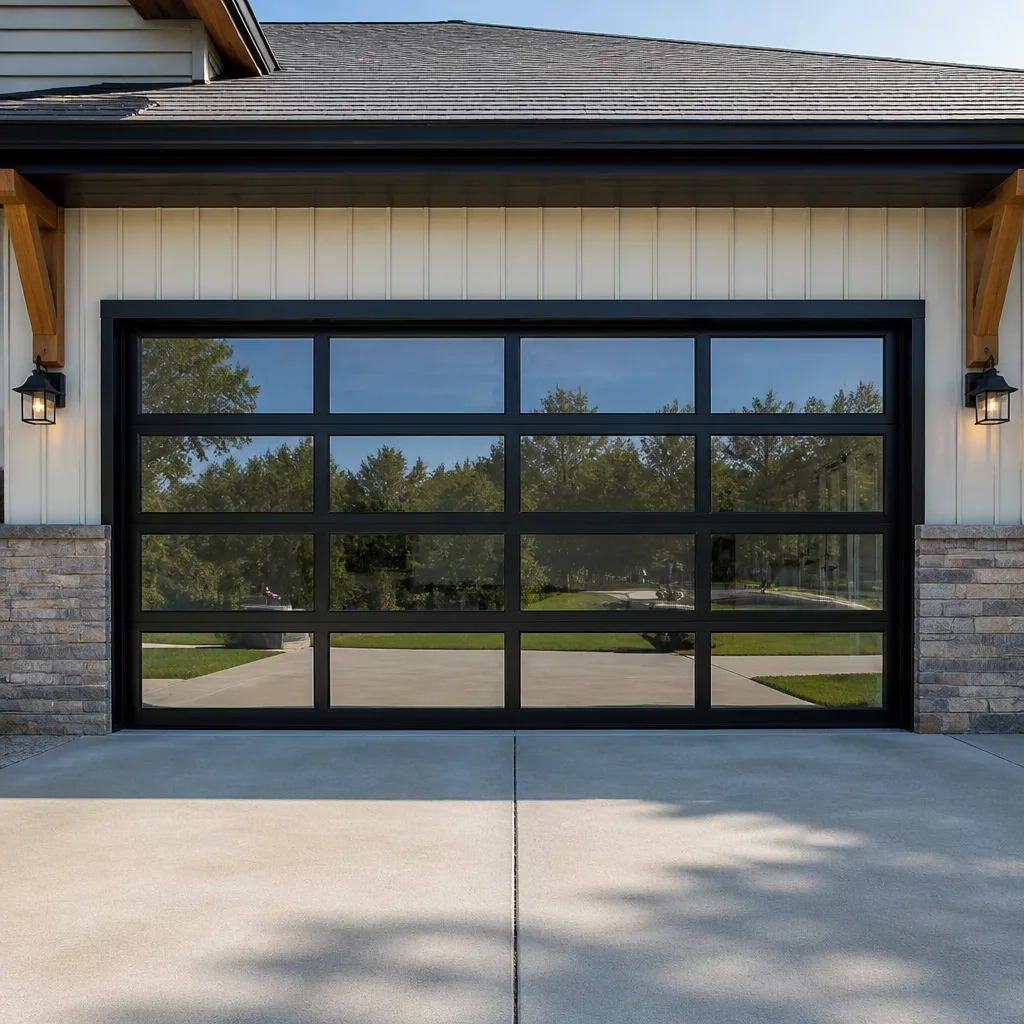 Full-view glass
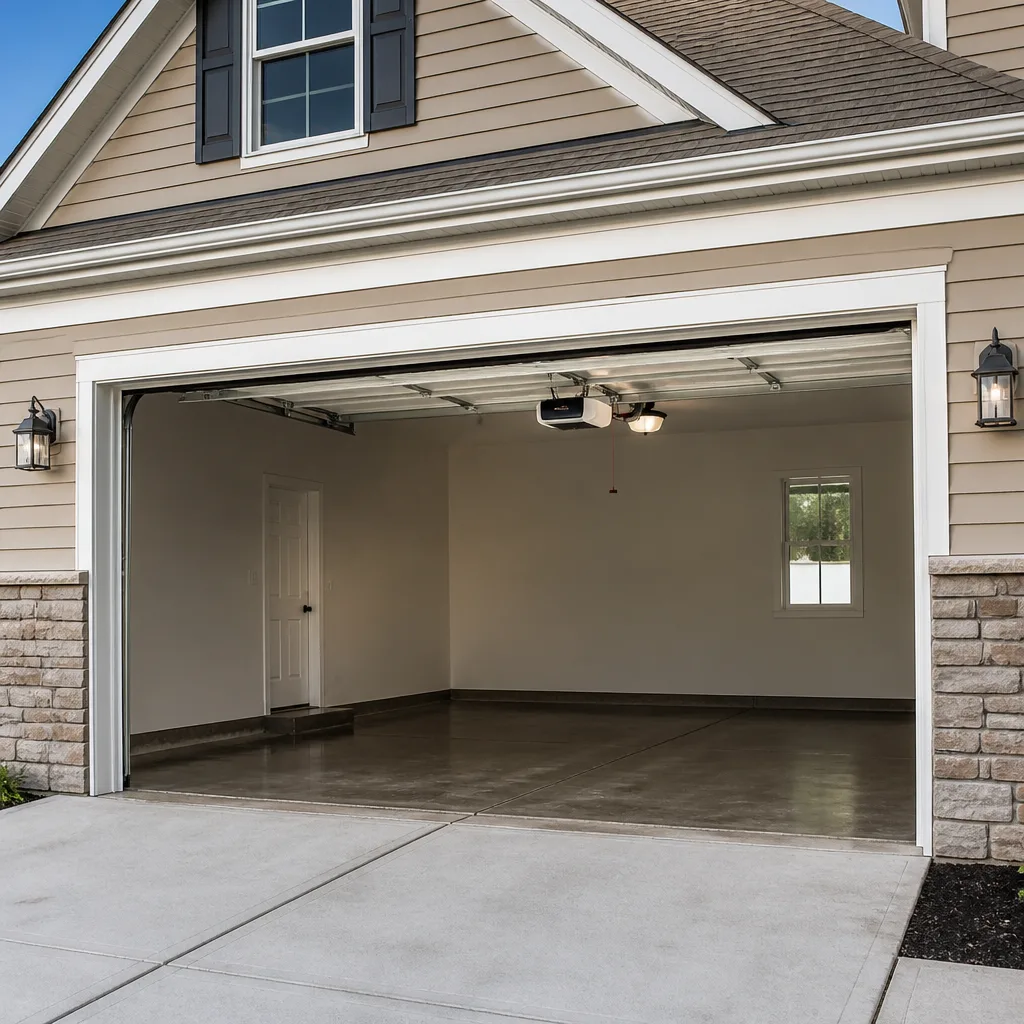 LiftMaster openers
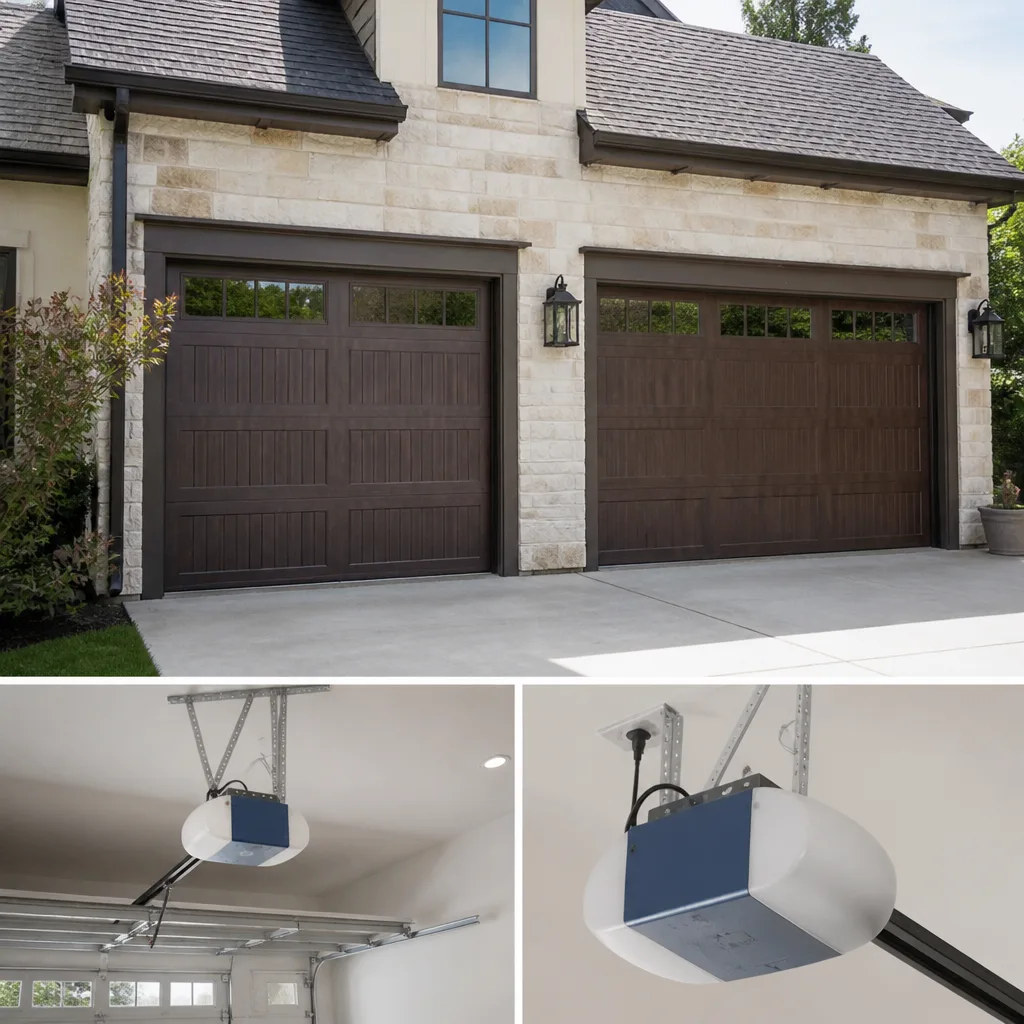 Chamberlain openers
Full 25-point door and opener safety check with every visit - springs, cables, rollers, tracks, and your LiftMaster or Chamberlain opener included
You get a price before we start. It does not change when the pro arrives.
Get your free estimateGarage Door Emergency Preparedness Guide for Levittown Homes
Most garage door emergencies we hear about in Levittown don’t start with a snapped spring. They start with a homeowner standing in the driveway, car locked inside, who has never once touched the red release cord hanging from their opener. It’s a small handle most people walk past for 10 years without pulling. Then a nor’easter knocks out the power, or an opener logic board fails, and suddenly the one lever that fixes the whole problem is an unfamiliar mystery. This guide is the opposite of that panic. We’ll walk through the manual release on the opener brands common in Levittown homes, the safe way to move a door when a spring is broken, a power outage protocol, temporary security measures, and the small kit worth keeping nearby before anything goes wrong.
Quick Answer
A garage door emergency in Levittown is manageable if you know three things in advance: where your manual release cord is, how to move a door safely when a spring is broken, and when to stop and call a professional. Most lockouts are a dead opener or a tripped release, not a catastrophic door failure, and both are reversible without tools. The one situation that always requires a trained technician is a broken torsion spring or a snapped cable – never force those.
Styles & brands we work with
- Raised-panel steel
- Carriage house
- Modern flush
- Full-view glass
- LiftMaster openers
- Chamberlain openers
Table of Contents
- How do you use the manual release on a garage door opener?
- How do you move a garage door safely when a spring is broken?
- What should you do during a Levittown power outage?
- Is a battery backup opener worth it for Long Island weather?
- How do you secure a damaged garage door after a storm or impact?
- What should be in a garage door emergency kit?
- When should you call a professional instead of troubleshooting?
How do you use the manual release on a garage door opener?
The manual release is a cord with a red handle hanging from the opener trolley. Pull it straight down toward the floor, and the trolley disengages from the door arm so you can lift the door by hand. That’s the entire procedure on a LiftMaster or Chamberlain opener, which together make up a large share of the belt-drive and chain-drive units we see across Levittown. A Genie or Craftsman opener follows the same logic, though the release handle may be a slightly different color or shape.
What makes this an emergency tool is that it only works if you know how to re-engage it later. On most openers, once the door is back in the closed position, you press the wall button or the remote and the trolley reconnects itself as the door travels. If it doesn’t catch, the door arm and trolley aren’t aligned – the door needs to be pushed fully down first, then the button pressed again.
Here’s the sequence most homeowners wish they’d practiced before they needed it:
- Pull the red cord straight down until the trolley clicks free.
- Lift the door slowly by hand to test the balance. If it feels heavy at any point, stop – a spring may be broken and the door can slam down.
- Move the door only as far as you need to get the car out or the door closed.
- To re-engage, close the door fully, then press the wall button or remote once and watch the trolley reconnect.
If the door feels heavier than usual when you lift it, don’t keep forcing it. That weight is the first sign of a broken torsion spring, and a heavy door can drop fast enough to cause serious injury. That’s a job for a trained technician.
How do you move a garage door safely when a spring is broken?
A torsion spring does the lifting; the opener only steers. When that spring snaps, the door becomes a dead weight of 150 to 250 pounds, and lifting it wrong can bring it down on you or the car. If you need to get a vehicle out before a technician arrives, there is one safe technique: lift with both hands, one on each side, and never let the door above your shoulders. If it feels heavy or starts to drift back down, lower it and stop.
Here’s what we mean by “lift with caution”:
- Stand to the side of the door panels, not directly under them.
- Keep your hands on the bottom section, palms flat, fingers away from the panel joints.
- Lift slowly until the door clears the car, then walk it back down under control.
- Never prop the door open with a broom handle or a chair. If it slips, nothing stops it.
The most important thing to know is what not to touch. The torsion spring, the cables, and the winding cones at the ends of the spring shaft are under extreme tension. They cannot be safely handled without proper tools and training, and a snapped cable can whip with enough force to cut through clothing. We recommend every Levittown homeowner treat the spring assembly as a hands-off zone and never try to adjust or replace a spring themselves.
If the door is completely down and you can’t lift it, don’t. Call a professional and let the car wait. A stuck car is an inconvenience. A dropped door is an injury. When you’re ready for the repair, our garage door spring repair service handles torsion and extension springs as a dedicated job, with the door properly braced before anything is loosened.
What should you do during a Levittown power outage?
Long Island outages from nor’easters and summer thunderstorms are the most common reason a Levittown garage door gets stuck. The door itself is fine; the opener simply has no electricity. Your options depends on whether the opener has a battery backup, and what you need to do first.
Follow this order during an outage:
- Check whether the opener has a battery backup (most LiftMaster and Chamberlain units sold in the last decade do). If the opener’s LED is still lit or the wall button responds, the door will open normally.
- If there’s no backup, pull the manual release cord and open the door by hand, using the safe lifting technique above.
- Leave the door in the position you need. If you’re leaving the house, keep it fully closed so the garage stays secure.
- When power returns, press the wall button and let the trolley re-engage. Test the door’s full travel once before relying on it.
One thing that catches people out: a power surge when the grid comes back can trip the opener’s logic board. If the opener stays dead after the lights come back on, don’t assume the motor is gone. Sometimes the fix is as simple as unplugging the opener for a minute and plugging it back in, which resets the control board. If that doesn’t work, the board or the gear assembly may have failed, and that’s a job for garage door opener repair. We work on the opener you already have rather than steering you toward a new brand.
Is a battery backup opener worth it for Long Island weather?
Yes, for most Levittown homes it’s the single most useful upgrade you can make. A battery backup keeps the door working for a handful of open and close cycles during a power outage, which is enough to get a car out, park a second car, or secure the house for the night. The cost is modest compared to the hassle of a manual release in the rain.
Most battery backup systems use a sealed rechargeable battery inside the opener housing. Worth checking:
- The battery should be replaced every few years, whether it has been used or not. Older batteries lose the ability to hold a charge.
- A small indicator light or beep on the opener usually signals a low battery. Don’t ignore it.
- If your opener is a Raynor or Amarr unit that predates built-in backup, an external battery backup accessory can sometimes be added. Whether it fits depends on the model.
For homeowners with a Wayne Dalton or Craftsman opener, the same advice applies: battery backup is a package option, and most current openers ship with it built in. If you’re not sure whether yours has one, a technician can check in a couple of minutes during a routine visit.
How do you secure a damaged garage door after a storm or impact?
When a panel is dented, bent, or pushed off its track, the door may not close all the way. That’s a security problem more than an access problem, and it needs a temporary fix while you wait for a repair. The goal is to close the gap without forcing the door into a position where it jams or falls.
Reasonable steps in the short term:
- Lower the door as far as it will go without binding. If it stops partway, don’t force it.
- If the door can’t close fully, block the gap from the inside with a piece of plywood or a heavy piece of furniture, not from the outside.
- If the opener is still functioning, run the door through one open and close cycle to see if the damaged panel is catching on the track. If it catches, disconnect the opener and leave the door in place.
- Lock the door with the built-in slide bolt if it has one, or add a temporary hasp and padlock on the inside track.
- Call a professional to assess whether the panel can be straightened or needs to be replaced. On a Clopay or Amarr door with sectional panels, a single panel can often be swapped without replacing the whole door.
If the damage came from a vehicle or a tree limb and the door is off its track, don’t try to straighten the track yourself. A misaligned track can drop a door the next time the opener runs. That’s a scenario for garage door repair the same day if access or security is affected.
What should be in a garage door emergency kit?
Three small items cover the vast majority of the roadside-style fixes a Levittown homeowner can safely do. The rest is a phone call. In our experience, the difference between a two-minute fix and a two-hour lockout is usually having one of these within reach.
The three-item kit:
- A flashlight that lives in the garage. Power outages mean you’ll be working in the dark. Keep it on a shelf near the opener, not in the house.
- The opener’s manual, or the model number written on the wall. A photo of the opener’s label on your phone works. When you call for help, the model number tells us exactly which parts and which release procedure apply.
- A pair of work gloves. Standard gloves protect your hands when lifting a heavy door and when handling any panel that has bent metal edges.
Two things we’d add if you have the space: a battery backup for the opener if it doesn’t already have one, and a visible sticker on the wall next to the opener showing the emergency release procedure. The sticker matters because it means anyone in the household – including a babysitter or a visiting relative – can use the release without calling you.
What you should not include: any tool intended for adjusting the spring or the cable tension. There’s no safe version of that for a homeowner.
How do you know when an opener has failed versus a power issue?
The opener has failed, not the power, when the wall button does nothing but the outlet itself still works. Plug a lamp or phone charger into the same outlet to test. If the outlet is live and the opener is silent, you’re looking at an opener problem, and it will need repair, not just a reset.
The symptoms usually point to one of three parts:
- The logic board: the opener is silent or beeps erratically, and the reset (unplug, wait, plug back in) doesn’t revive it.
- The gear and sprocket assembly: you can hear the motor running but the door doesn’t move, or there’s a grinding sound. On older Genie and Craftsman units, this is one of the more common failures we see in Levittown.
- The safety sensors: the door starts to close and immediately reverses. This is often misalignment of the two sensors at the bottom of the track, not a motor issue.
That last one is worth checking first. A bumped sensor or a spider web across the lens will stop the door from closing more often than any internal part. If the sensors are lined up and the LED on each is steady, and the door still won’t close, that’s a job for a technician. Getting the opener’s model number before you call saves time, because the parts and typical failure pattern differ from one unit to the next.
When should you call a professional instead of troubleshooting?
Call a professional immediately for any broken torsion spring, any snapped cable, any door that’s off its track, and any panel that has bent enough to interfere with the door’s travel. These are the situations where homeowners get hurt trying to help. The spring and cables are under enormous tension and cannot be safely handled without training and proper tools. A heavy door that’s lost its lift assist can drop without warning.
For an opener that won’t respond, a door that reverses instead of closing, or a stuck manual release, a phone call usually resolves it in a few minutes, and many fixes can be handled the same day.
Levittown Garage Door Repair Experts offers free estimates in Levittown – call (877) 770-2029. Our technicians have up to 11 years of experience, work on the brand of door and opener you already own, and give you an upfront price before any work starts.
See the difference
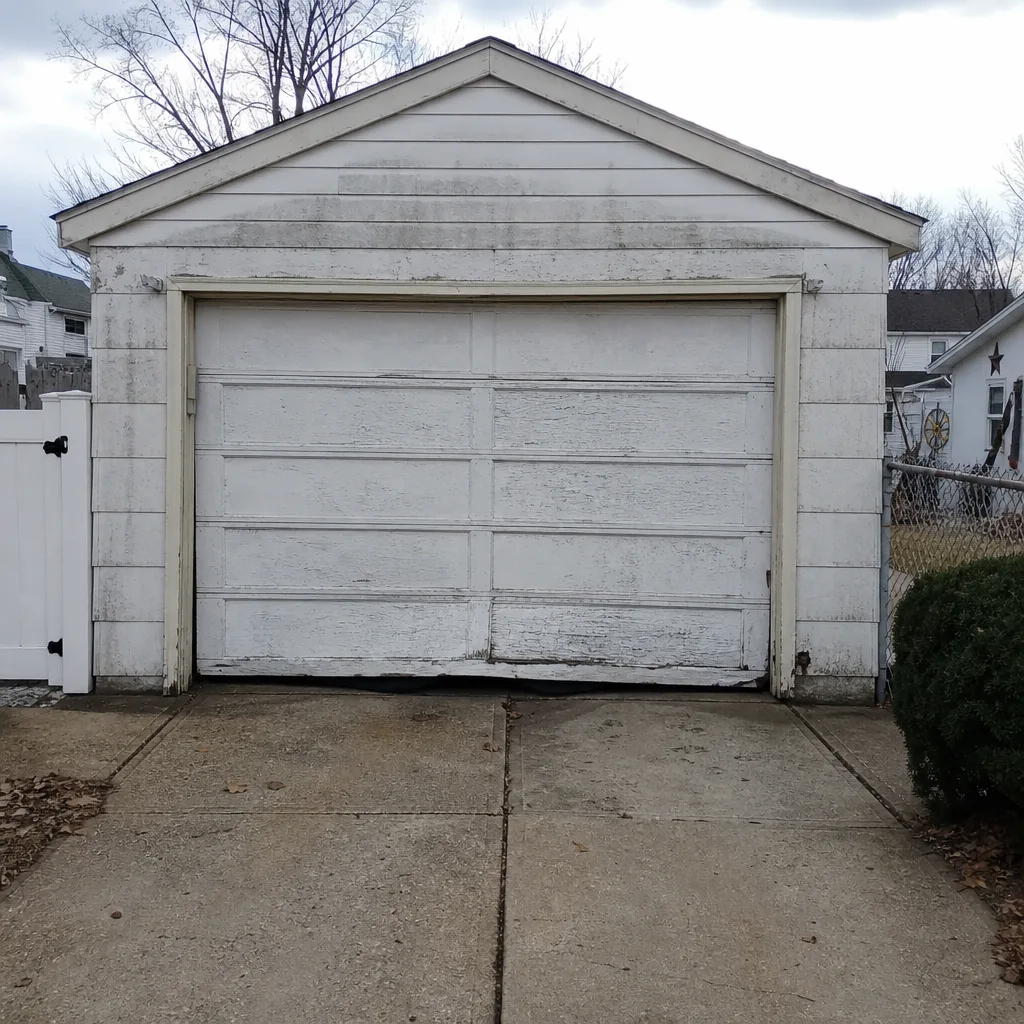 Before
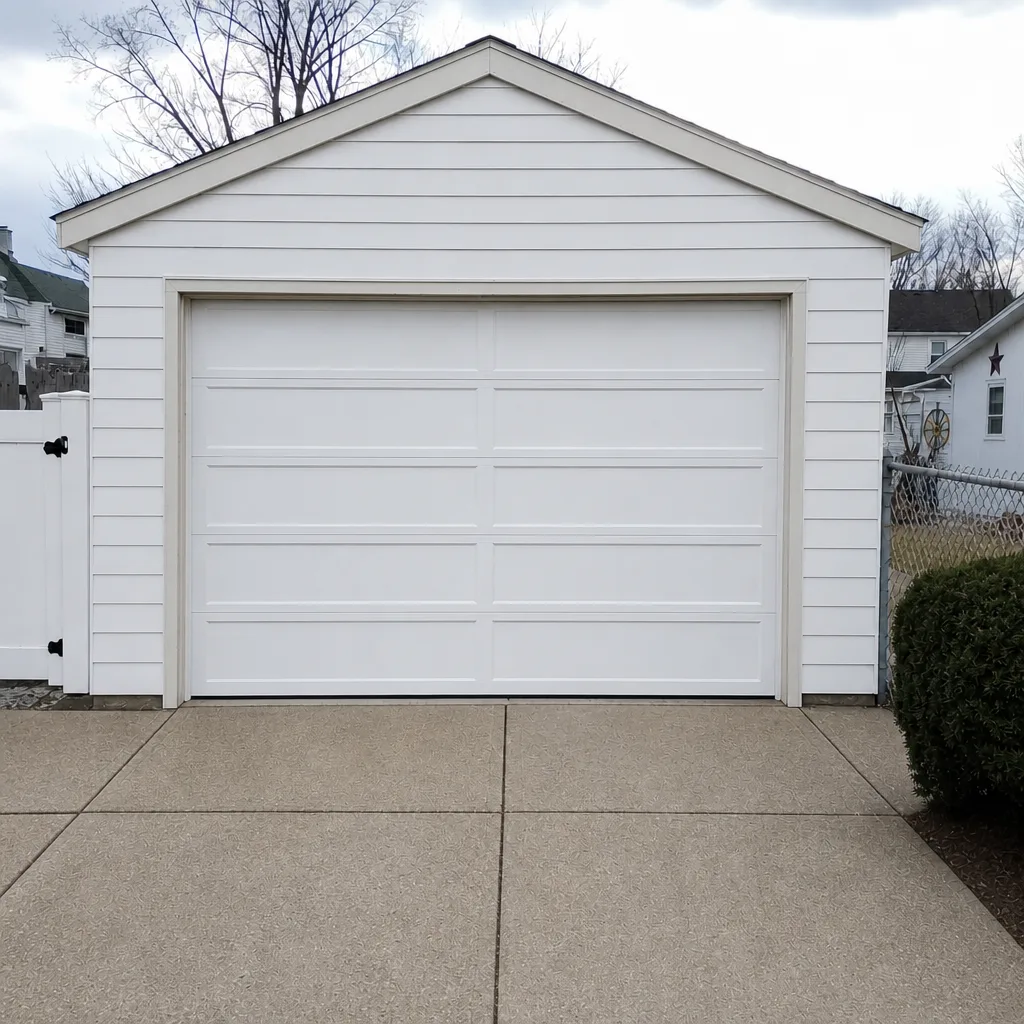 After
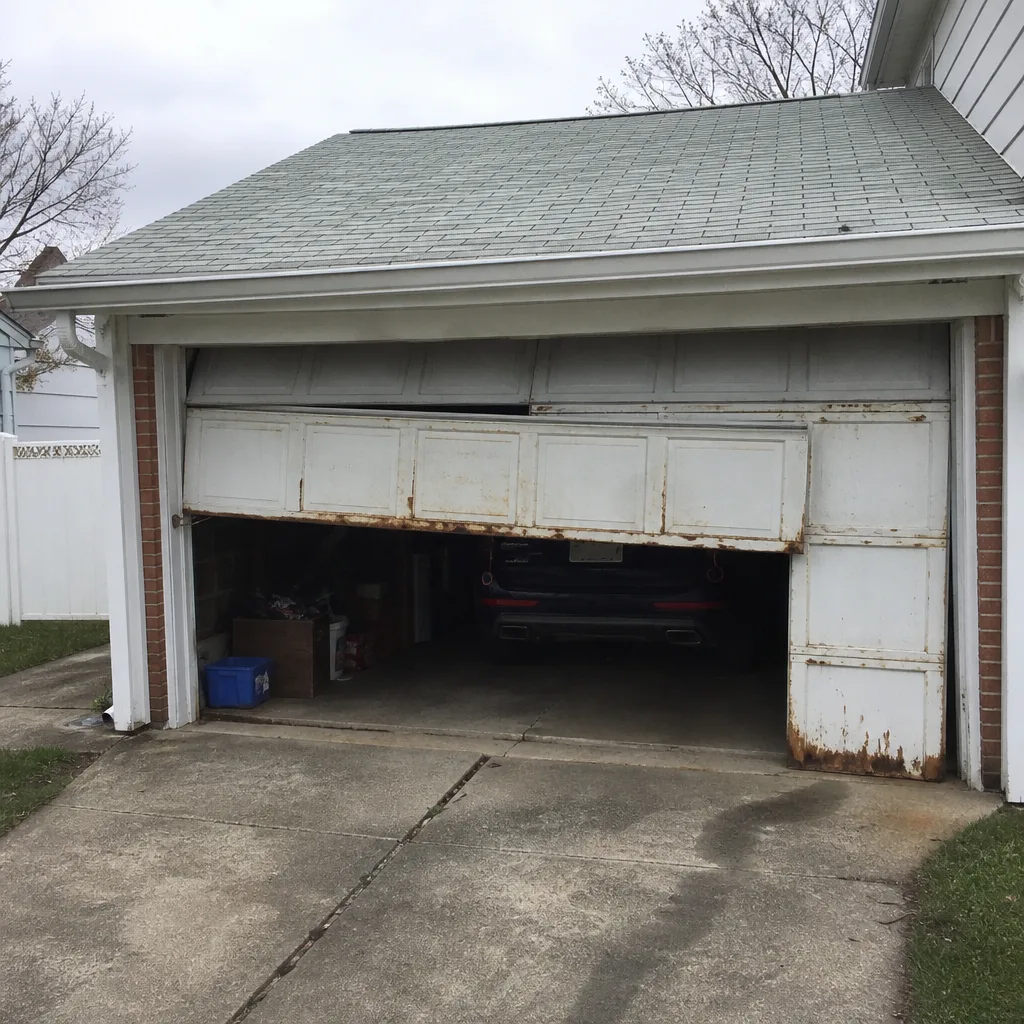 Before
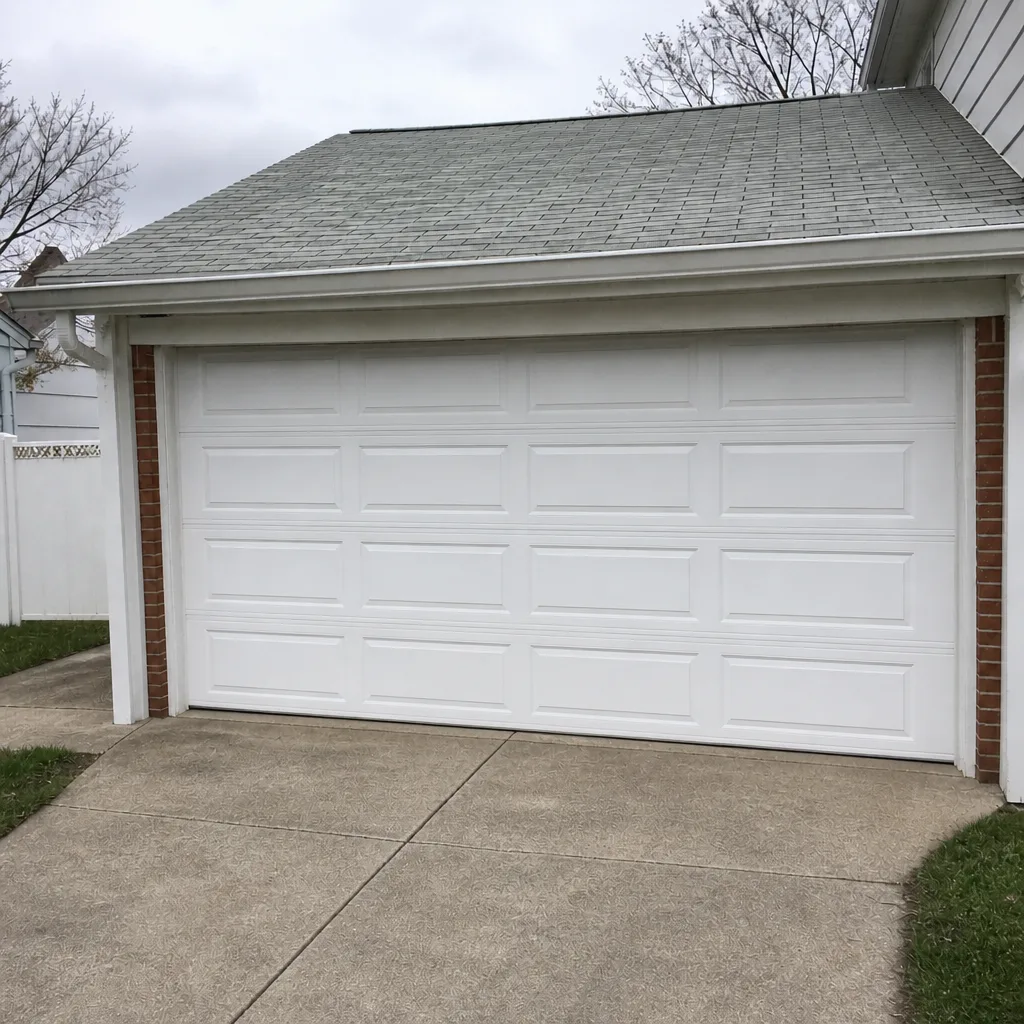 After
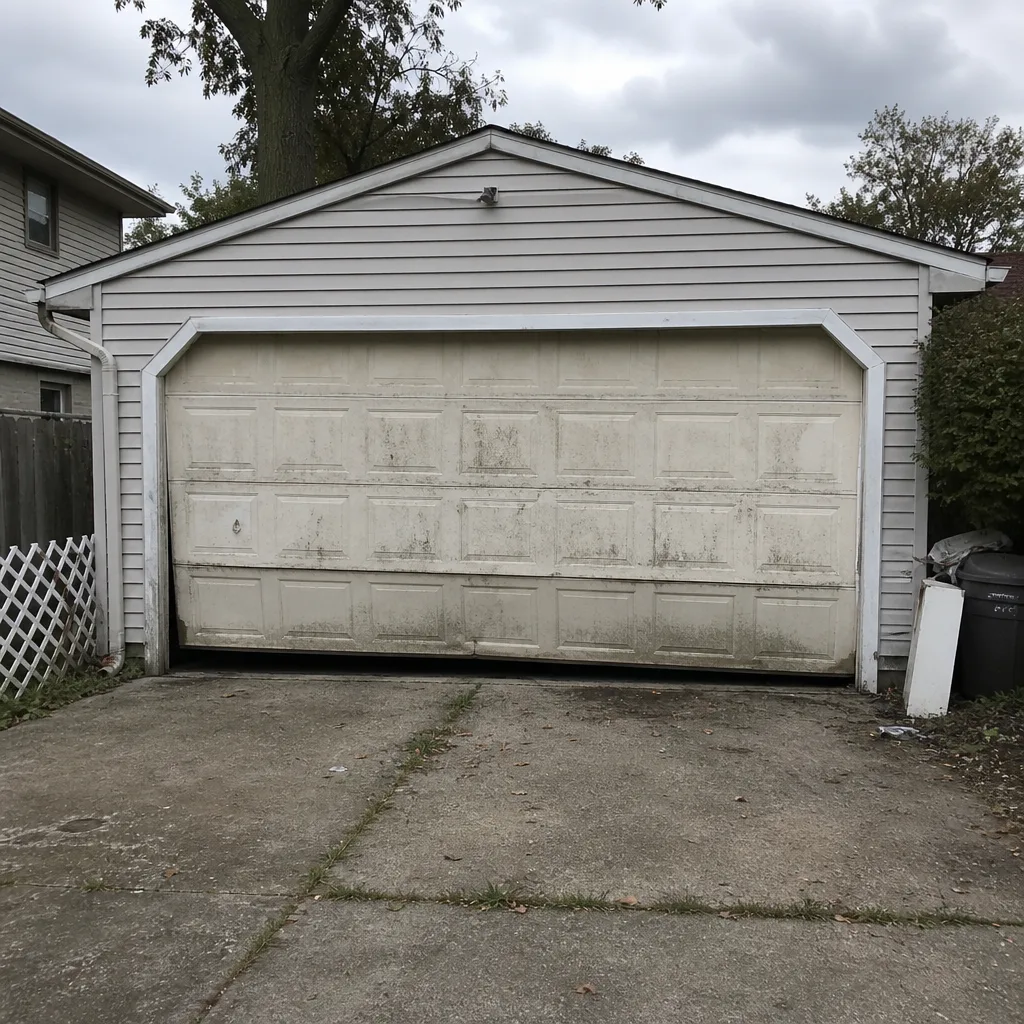 Before
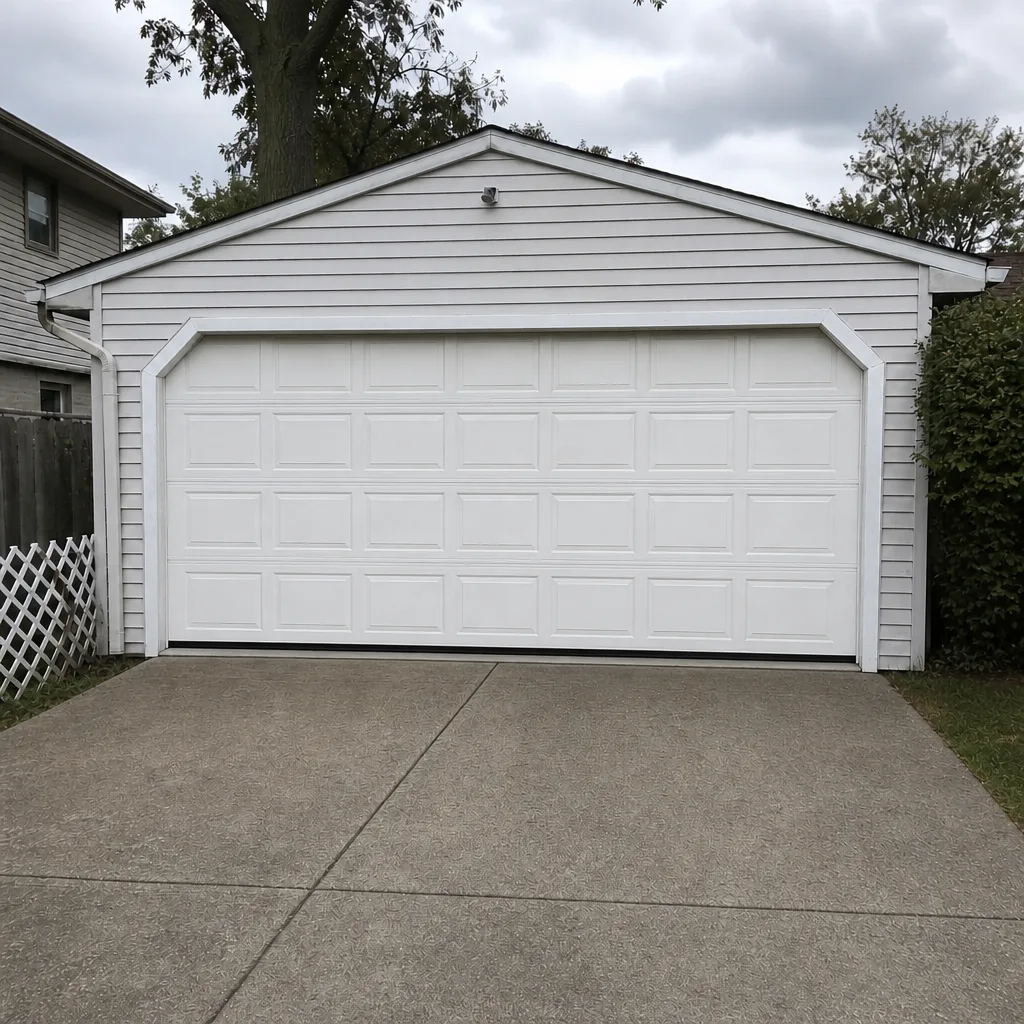 After
Common Mistakes to Avoid
- Never force a door that feels heavy. If the door resists when you lift it by hand, a spring or cable has likely failed. Continuing to push risks a sudden drop and serious injury.
- Don’t prop an open door with a broom handle or chair. It’s a common instinct and a bad one. A door that’s missing its lift assist has nothing holding it up, and a prop can slip without warning.
- Don’t spray a squealing spring with oil and call it fixed. A torsion spring that’s chirping is often telling you it’s wearing out. Lubricating it can quiet the noise for a while, but it doesn’t address the wear and it masks an early warning sign.
- Don’t leave a damaged panel propped open overnight after a storm. A partly open garage in a Levittown neighborhood is easy to spot from the street. Block it from the inside while you wait for a repair.
- Don’t reset a tripped opener by cycling it repeatedly. If the door is bound on a damaged panel or off its track, running the opener again can damage the gear or shear a sprocket, turning a minor repair into a bigger one.
- Don’t assume the opener is the problem because the door won’t move. A door that won’t lift can look like a dead opener when the real problem is a broken spring or a snapped cable. The door will not lift with a broken spring no matter how healthy the motor is.
- Don’t skip practicing the manual release. The most common reason homeowners get stuck is that they’ve never pulled the cord before. Do it once, when everything is calm, so it’s familiar when it isn’t.
Frequently Asked Questions
Spring repair in Levittown typically costs $180 to $340 for one spring, depending on whether it’s a torsion or extension spring and how the door is set up. A matched pair is usually replaced together, so a pair runs about twice that. The written estimate you get before any work starts is the price that applies. Call (877) 770-2029 for an exact quote – estimates are free.
Yes, same-day service is available for emergencies like a broken spring, a snapped cable, or a door off its track. Call (877) 770-2029 and describe what the door is doing – whether it’s heavy to lift, whether the opener runs but the door doesn’t move, or whether the door is stuck halfway. That description helps us arrive prepared.
No. The written estimate you’re given before any work begins is the price that applies, and we don’t start until you’ve agreed to it. The number you see on the estimate is what you pay once the repair is done. If we find something the estimate didn’t cover, we stop and talk it through before touching it.
Yes – the local pro we connect you with is licensed and insured as New York requires. Our technicians have up to 11 years of experience, and can work on LiftMaster, Chamberlain, Genie, Clopay, Amarr, Wayne Dalton, Craftsman, and Raynor equipment. That matters for emergency calls, because the technician arrives already familiar with the specific failure patterns of your brand.
Cold weather tightens the door’s metal components and can cause a tired torsion spring, a worn cable, or a failing opener gear to finally give out. Long Island winters also bring ice buildup at the door’s bottom seal, which can fool the safety sensors into thinking something’s in the way. If the door reverses on its own after a cold snap, check the sensors first, then call if the door still resists.
First, confirm the door is fully closed and pushed all the way down by hand. Then press the wall button or remote once and watch the trolley on the opener rail – it should click into the door arm as the door starts to travel. If it doesn’t catch, the door arm and trolley aren’t lined up, and the fix isn’t always something you can do safely from a ladder. Call (877) 770-2029 and we’ll talk through it on the phone.
The Bottom Line
Most garage door emergencies in Levittown follow predictable patterns: a power outage that flips the opener dead, a torsion spring that finally fails, a cable that snaps, or a panel that gets bent during a storm. The homeowner who’s prepared knows where the red release cord is, knows not to force a heavy door, keeps a flashlight and the opener’s model number handy, and knows which situations are strictly for a technician. Practicing the manual release once, on a calm day, is the single most useful thing you can do. Everything else is a phone call and a repair. When a door does fail, our team at Levittown Garage Door Repair Experts is set up for same-day emergency calls, works on the system you already own, and repairs before recommending replacement.
Have a door that won’t open, won’t close, or feels heavier than it should? Call (877) 770-2029 for a free estimate. We’ll tell you exactly what’s wrong before anyone touches the door.
Written by the team at Levittown Garage Door Repair Experts.